Eating in India
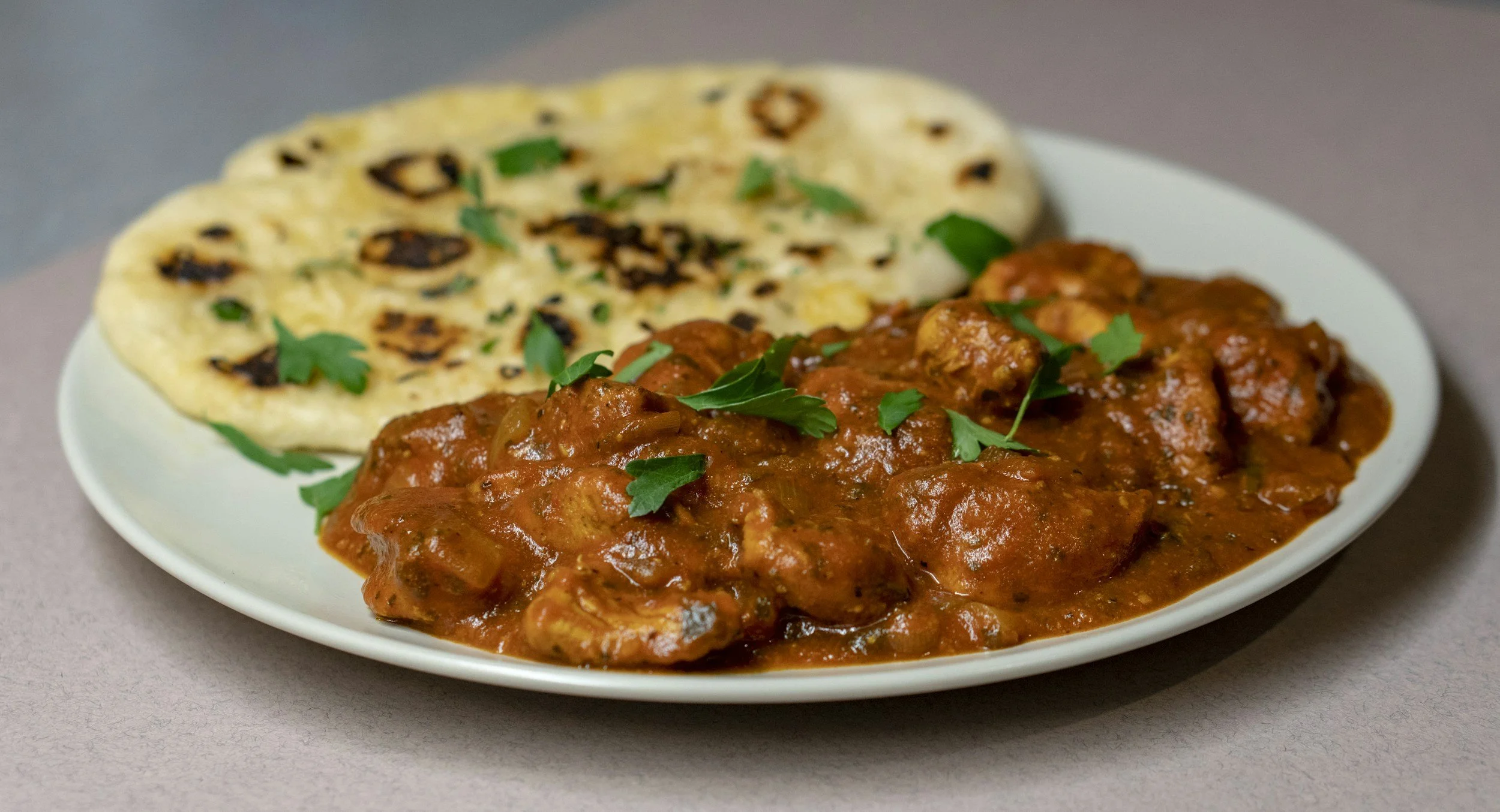
Eating Indian food in India is an experience both novel and familiar.
Familiar, because who doesn’t love a good curry? You’ve almost certainly eaten a version of Indian food before, and chances are that you’ve liked it. There’s a reason Indian food is one of the most widespread cuisines on earth. Ok, it’s true, the global Indian diaspora has adapted its flavours to suit tastes abroad. But if you go to India you will be able to find the delicious source code for your butter chickens, your biryanis and your kormas that are served in restaurants the world over. And you’ll find your naan breads and pappadums and chutneys and samosas and pilau rices that all fuel your love of Indian food back home, albeit the naan will taste fresher, and the range of chutneys on offer will be much more extensive. My guess is that if you like Indian food outside of India, you’re going to love Indian food inside of it.
Regional Variety
But eating Indian food in India is also an adventure. You will try flavours that you’ve never encountered before. You will eat dishes totally uncommon in the West. And if you travel far enough you will realize that the regional variation in Indian cuisine is so profound that it’s probably more accurate to talk of many Indian cuisines, rather than “Indian food” as some kind of singular and coherent category. The tang of a Goan ambok tik fish curry tastes a world away from the creamy aromatics of a murgh makhani.
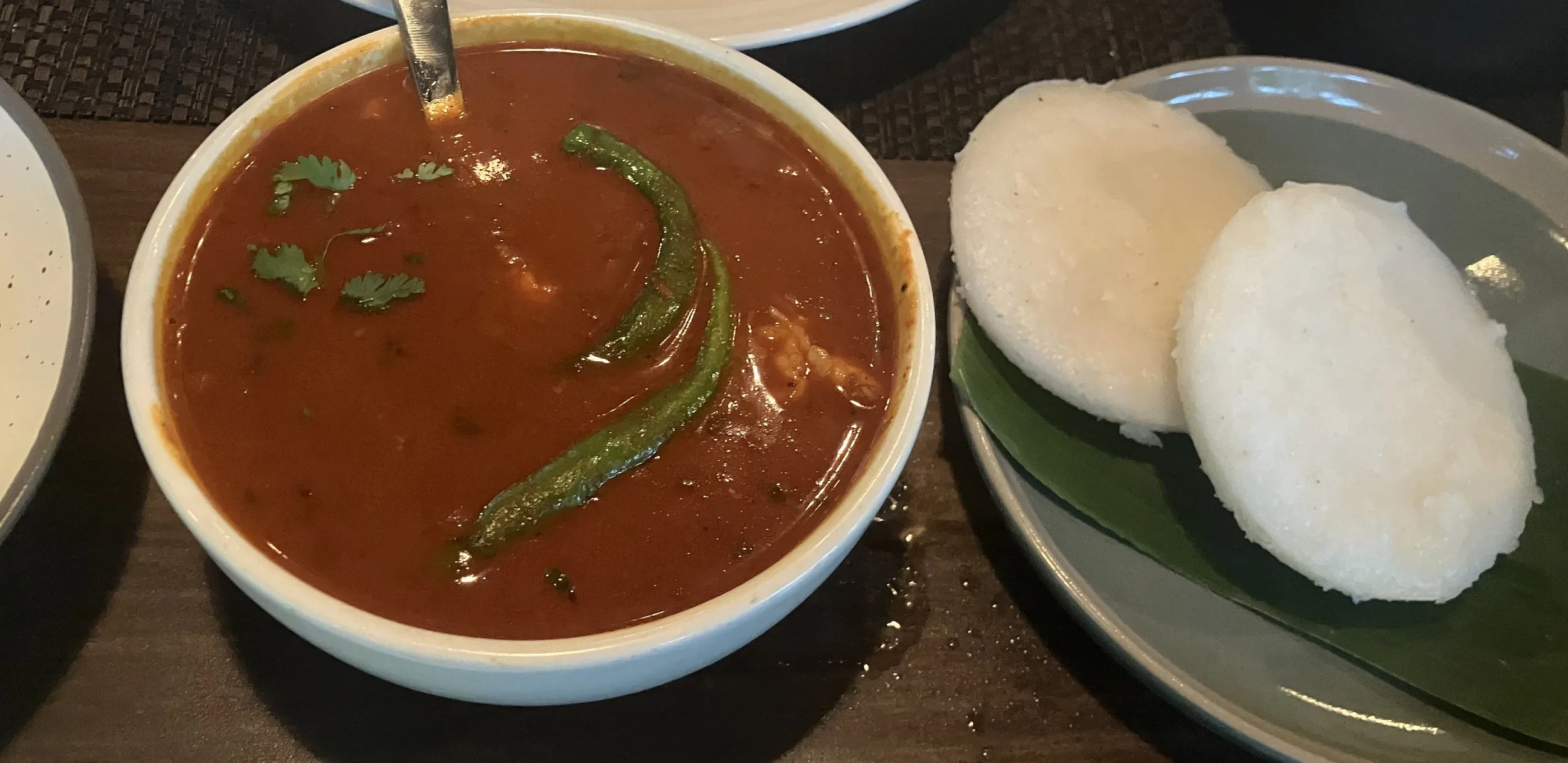
A tangy Goan ambok tik, served with sanna, a type of fermented rice cake similar to idli.
Indians take pride in these regional differences, and when they travel within India they meet every opportunity to try regional specialties with great enthusiasm. I remember a fellow passenger on a train to Mysore leaping out of his seat with excitement when the train pulled up to the platform of a small town called Maddur. “You’ve got to try this”, he effused, as he waved down a food-seller who had just boarded the train and bought each of us who were sat together a maddur vada. “It’s a local fried snack that’s from this town, and I didn’t realize we were stopping here!”, he added with excitement. Or at breakfast in Hampi when a mother caught me inquisitively eyeing the balls of dough she was sharing with her family and so insisted that I try one: “they’re called appe”, she informed me as she forced one onto my plate against my polite objections, “proper South Indian food”, she added with a smile. Indians, I have found, are meticulously generous in sharing food, especially with foreigners unfamiliar with local specialties, and this has often led to strangers sharing or buying food for us to try on our travels.
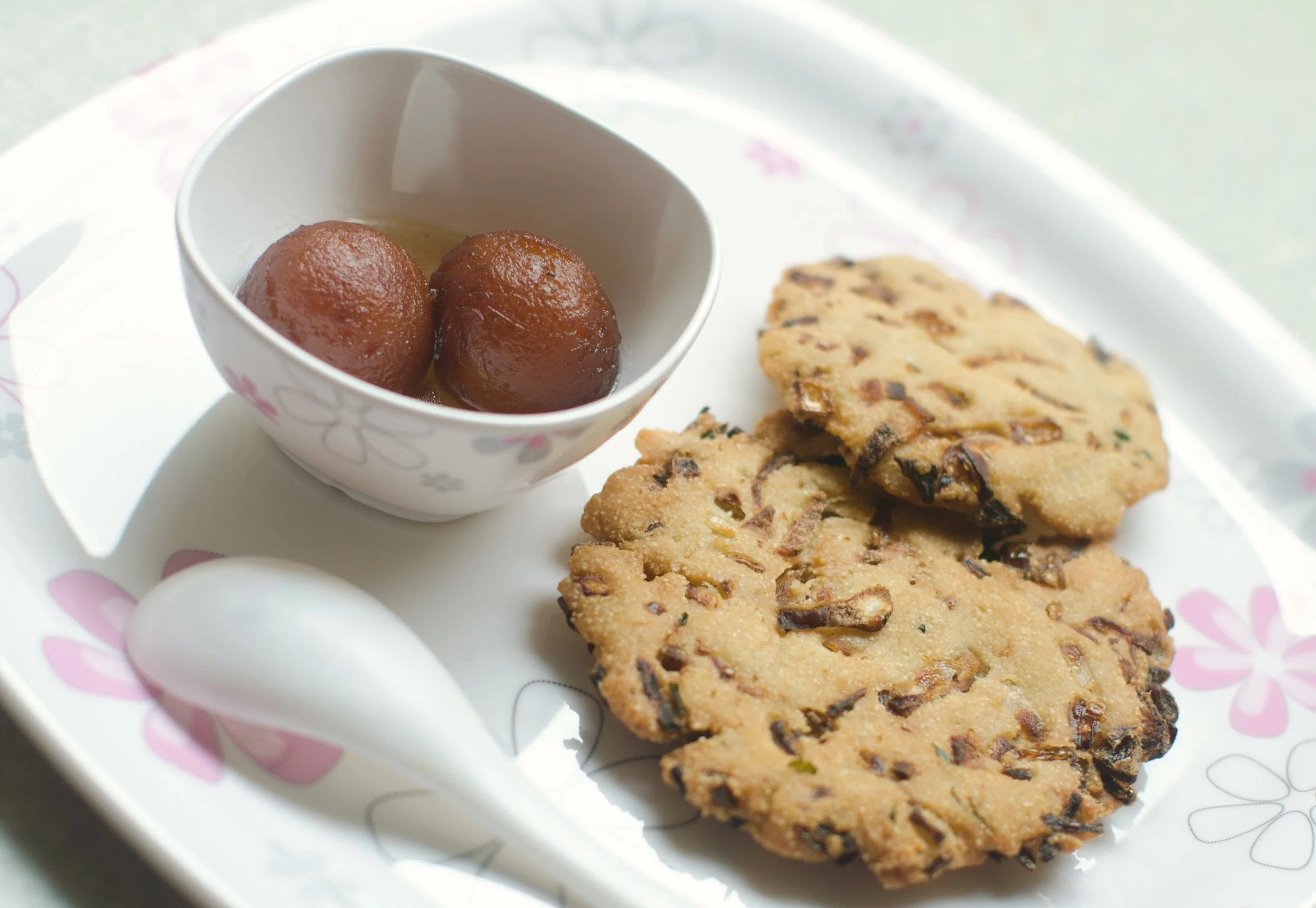
Maddur vada (right), a local specialty from Maddur, Karnataka.
One thing eating and travelling around India will gift you is a sharper sense of this great regional variety within this rather cumbersome umbrella category of “Indian food”. You will quickly realize that the staple Indian dishes served in the West are just a small fraction of the great culinary variety that India has to offer. After all, India is larger than all of Western Europe combined, and yet we have no difficulty distinguishing French from German cuisine, or an Irish stew from a Dutch stamppot. If you spend long enough eating in India you will be able to tell instinctively that, for example, the popping mustard seed and crisp fresh curry leaf flavours in your dish mean it’s probably from the South. Or that the rich and creamy curry that you’re trying most likely came from the North. Or that tang of kokum cutting through coconut most likely places this dish somewhere on the Malabar or Konkan coast.
Other Distinctions in Indian Cuisine
Beyond this great regional variety, there are other ways in which Indians themselves create distinctions in their cuisine. One of the first distinctions that any Indian taxi driver will ask you when you want them to take you to a good local restaurant is “veg or non-veg?” Restaurants in India often categorize themselves as one or the other, although non-veg restaurants also usually sell a variety of vegetarian dishes as well. In fact India is one of the great places on earth for vegetarian and vegan cuisine, and if you are so inclined you will eat well and without difficulty. But there is also of course a great tradition of non-vegetarian cooking in India as well, from chicken curries to lamb kebabs, that sometimes overlaps with religious difference. Hindus, Buddhists and Jains tend (although not always) to eat more vegetarian food, whereas Muslim-owned restaurants and neighbourhoods in India often (though not always) serve more meat. Whether you are a meat-eater or a vegetarian, you are going to eat well in India, and if you are a meat-eater you should try the veg restaurants as well because they’re often really really good!
Another method of distinction is the variety of cooking methods and techniques that are used. Was your dish cooked on the tawa or the tandoor, or was it steamed in the dum? It is not unusual to see sections of Indian menus titled “from the tandoor” or “on the tawa”. Is your dish stewed in liquid (or “gravy” as the Indians call the delicious sauces that comprise their wet curries) or is it a dry preparation? Are your spices cooked low and slow in a bhuna, or flash-fried hot and fast in a tadka? Indian cuisine encompasses a dizzying array of cooking methods and techniques, and the way in which your dish was cooked is often one of its key distinguishing features.
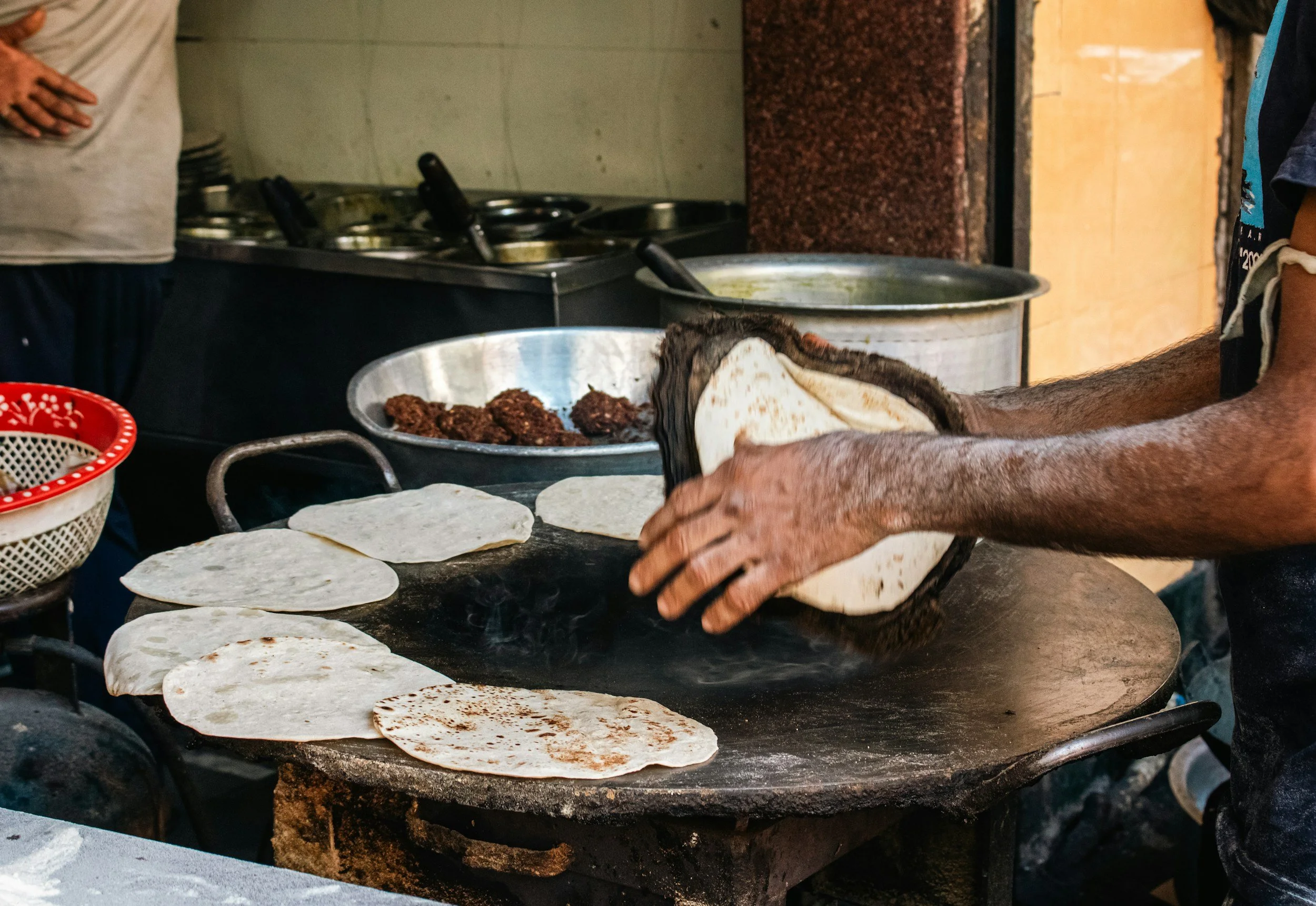
Cooking on the tawa, a type of flat Indian pan used for dry-frying.
International Influences
Indian food also encompasses a whole series of internationally-influenced fusion cuisines that are nevertheless irrefutably Indian. On my first trip to India I would gloss over the “Chinese” or “Manchurian” dishes on menus, because why would I eat Chinese food in India? This was before I discovered that Indo-Chinese food is a distinct cuisine, blending both Chinese and Indian flavours, and altogether different from the Chinese food you might find in China, or in Chinese take-aways around the world. Now I get a rush of excitement each time I see Gobi Manchurian on the menu of an Indian restaurant: lightly battered cauliflower that crisps in a Chinese-style sweet-and-sour sauce and often topped with a curry-leaf tadka. Delicious, with both Indian and Chinese flavours, and with outstanding texture.

Gobi manchurian, a common Indo-Chinese dish served throughout India.
Thanks to thousands of years of Persian migration to India, Iranian cuisine has also influenced entirely unique styles of Indian cooking. In Mumbai, Parsi food is celebrated as a local cuisine just as much as Marathi cooking, and no foodie’s Mumbai itinerary is complete without a visit to a few Parsi cafes. In Hyderabad the Irani chai is unsurpassed, especially when accompanied with an Osmania biscuit, a delicious shortbread itself influenced by Persian and Ottoman baking customs.
Mughlai cuisine, thanks to the vast territory and trading links of the former Mughal Empire, is also a fusion of Indian, Central-Asian and Turkic culinary styles. Centuries of traders arriving from the Middle East also left a profound culinary legacy, particularly on the Malabar and Konkan coast. European colonialism influenced a variety of local fusion cuisines. The Portuguese influences in Goan cuisine, for example, make it quite unlike any other food in India. In Pondicherry French dishes are often given a South Indian twist. And of course the British, despite their famously bland cuisine (especially when compared with Indian food!), nevertheless left their mark on local eating habits – the sandwich culture in Mumbai, for example, takes something so dull as white sliced bread, and turns it into a flavour explosion! Neighbouring countries and cultures have also left their mark. Sri Lankan and South-East Asian influences are prominent in Chettinadu cuisine, Burmese cooking can be found in Kolkata, and Tibetan Momos are served everywhere in India, even in the South, thousands of miles from their Himalayan origins.
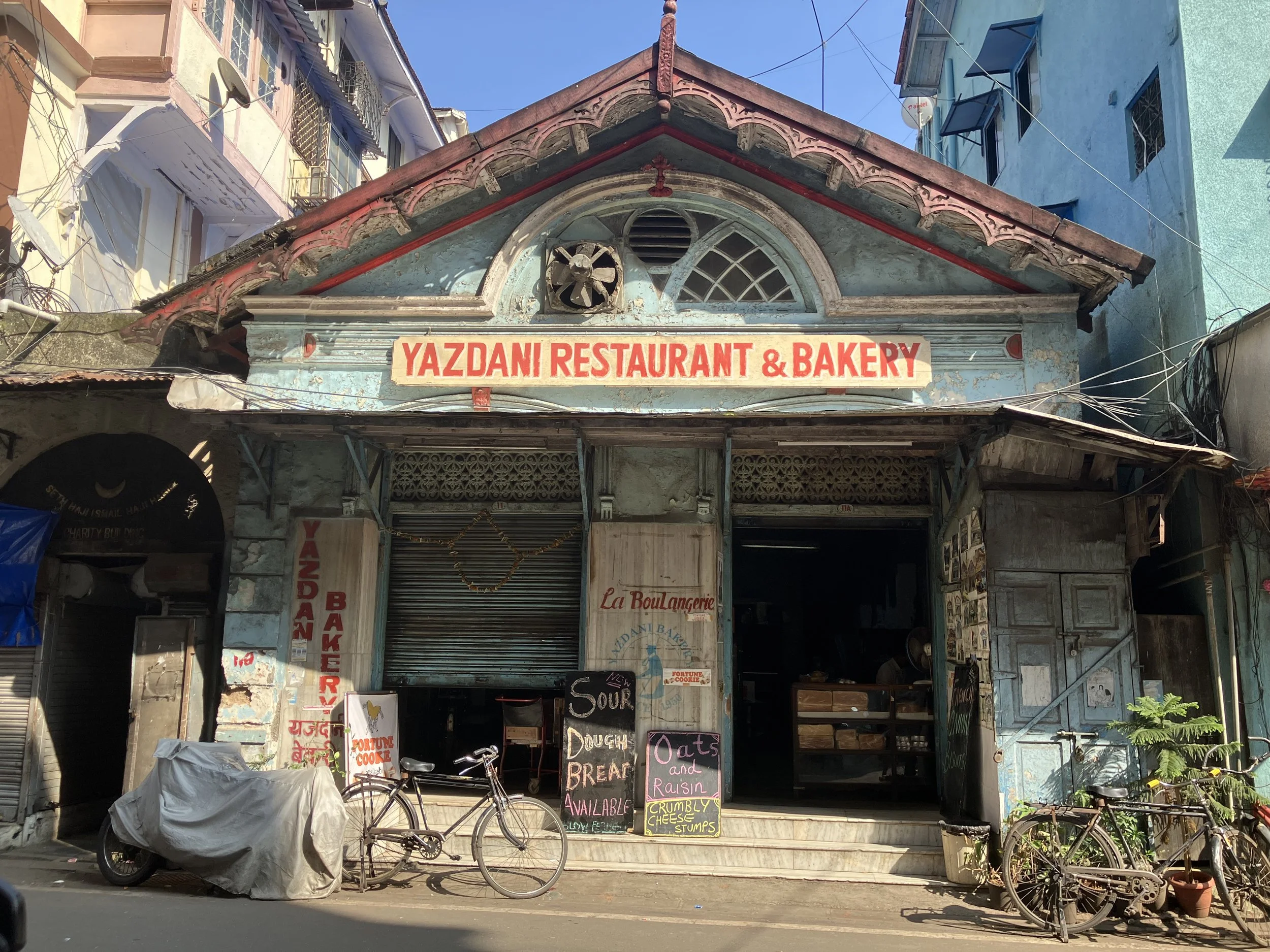
A Persian bakery in Mumbai.
In other words, Indian cuisine is a mashup of local and international influences of infinite variety arrived at through centuries of trading and migratory patterns. Without these international influences Indian food would be unrecognizable. Can you imagine, for example, Indian cuisine without the humble tomato? An ingredient that didn’t arrive in India from its native South America via Portuguese traders until the 16th Century, and yet today is a staple of so many curries, chutneys and masalas. Yet India has a way of incorporating these international influences, fusing them with local ingredients and techniques, and producing something altogether unique and still distinctly Indian. Both novel and familiar.
In the posts that follow I’ll be writing about some of the dishes and cuisines that I’ve encountered in India. But always remember that India is a vast country with an incredible variety of local and regional cuisines. All I can offer are snapshots.
