Travelling in India
So you’re thinking about travelling to India, but there’s something holding you back? Maybe it’s the exaggerated stories you’ve heard from travellers you’ve met who describe India as a chaotic assault on the senses, a place where you might experience severe culture shock, and be confronted by extreme poverty, crime, waterborne disease, and the dreaded “delhi-belly”. Like most tall tales, there is a grain of truth in some of these claims. India is crowded. A taxi ride through one of its big cities can be a white-knuckle ride where you wonder at the end of it how on earth you didn’t end up in multiple traffic accidents. You’ll need to squeeze through crowded streets and markets. Pickpocketing and other more serious crimes happen, as they do everywhere on earth. The cities are a cacophony of noises, sights, and smells that make it important to build in a bit of downtime into your itinerary. You’ll see extreme poverty. And there’s always a chance that you might get sick, but there’s also a very good chance, if you take the right precautions, that you won’t. Like all tall tales, there are grains of truth here, but usually they’re exaggerated.
What these tall tales also tend to ignore are the many wonderful and welcoming aspects of travelling in India. So let me help set the record straight a bit. Indian people are some of the most friendly and welcoming denizens I have wandered amongst. They love sharing their food and their culture with foreigners, and they will overwhelmingly meet lost or nervous travellers with kindness and a desire to help. Indian food is fantastic, and if you take the right precautions, the risks of getting sick are relatively low. The same is true with crime. Shit happens, and you should have your wits about you, but know that crime rates against tourists are relatively low. With a bit of planning, it’s also one of the easiest, cheapest, and safest countries to travel across. English is also widely understood and spoken, especially in tourist areas. And although the traffic and the crowds in the big cities are indeed a little chaotic, and a touch overwhelming at times, this riot of sensations is also precisely what makes India so exhilarating.
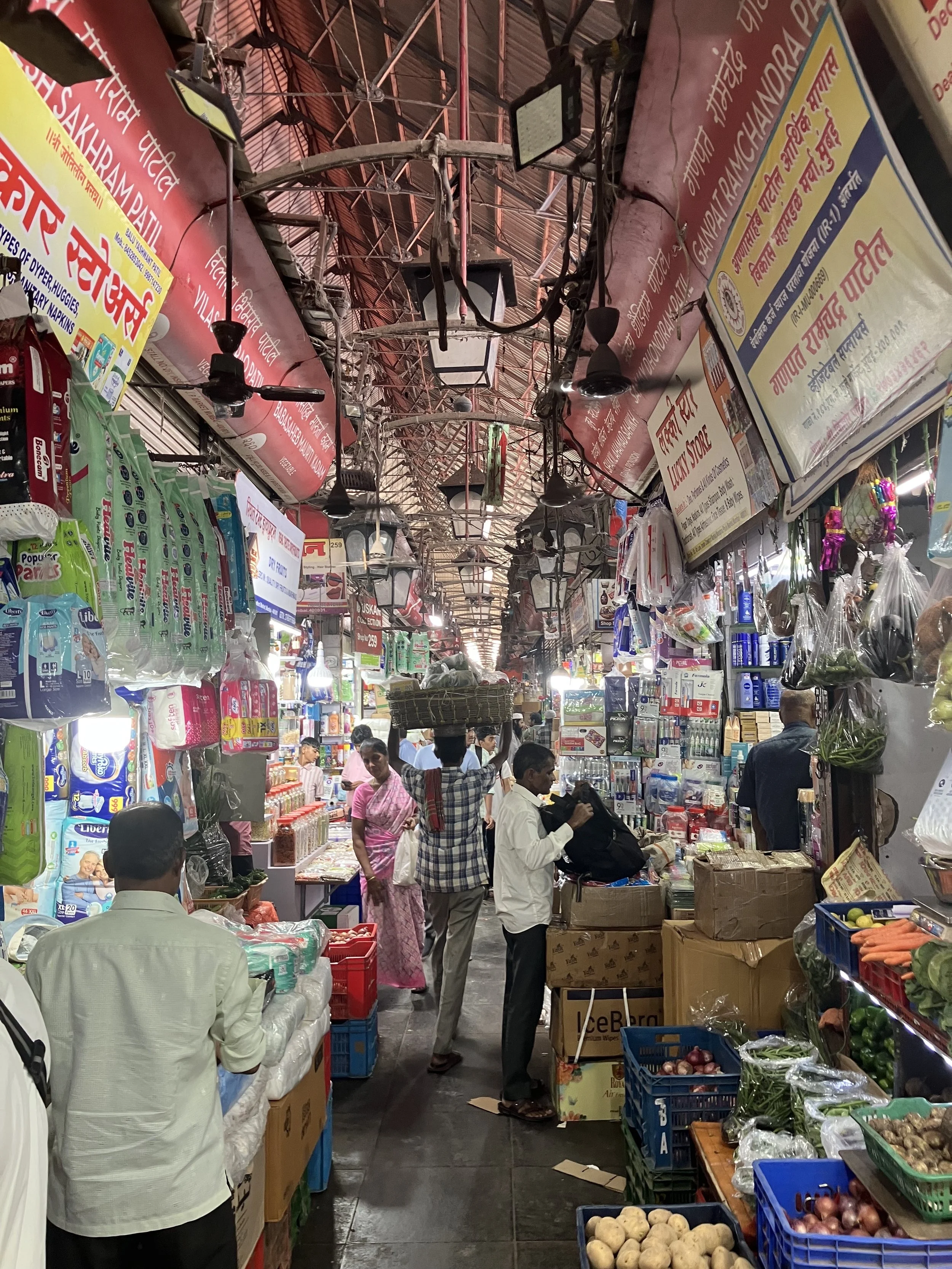
A “riot of sensations” at Crawford Market, Mumbai.
So don’t be a fool, but don’t hold back. With a bit of basic preparation and a few common-sense precautions, India can be a relatively safe, welcoming, and joyful place to visit that will captivate you and leave you wanting more. In this guide, I hope to offer the curious traveller a few basic practical pointers on travelling in India, and hopefully help to encourage and prepare you for the trip of a lifetime…
Before You Go
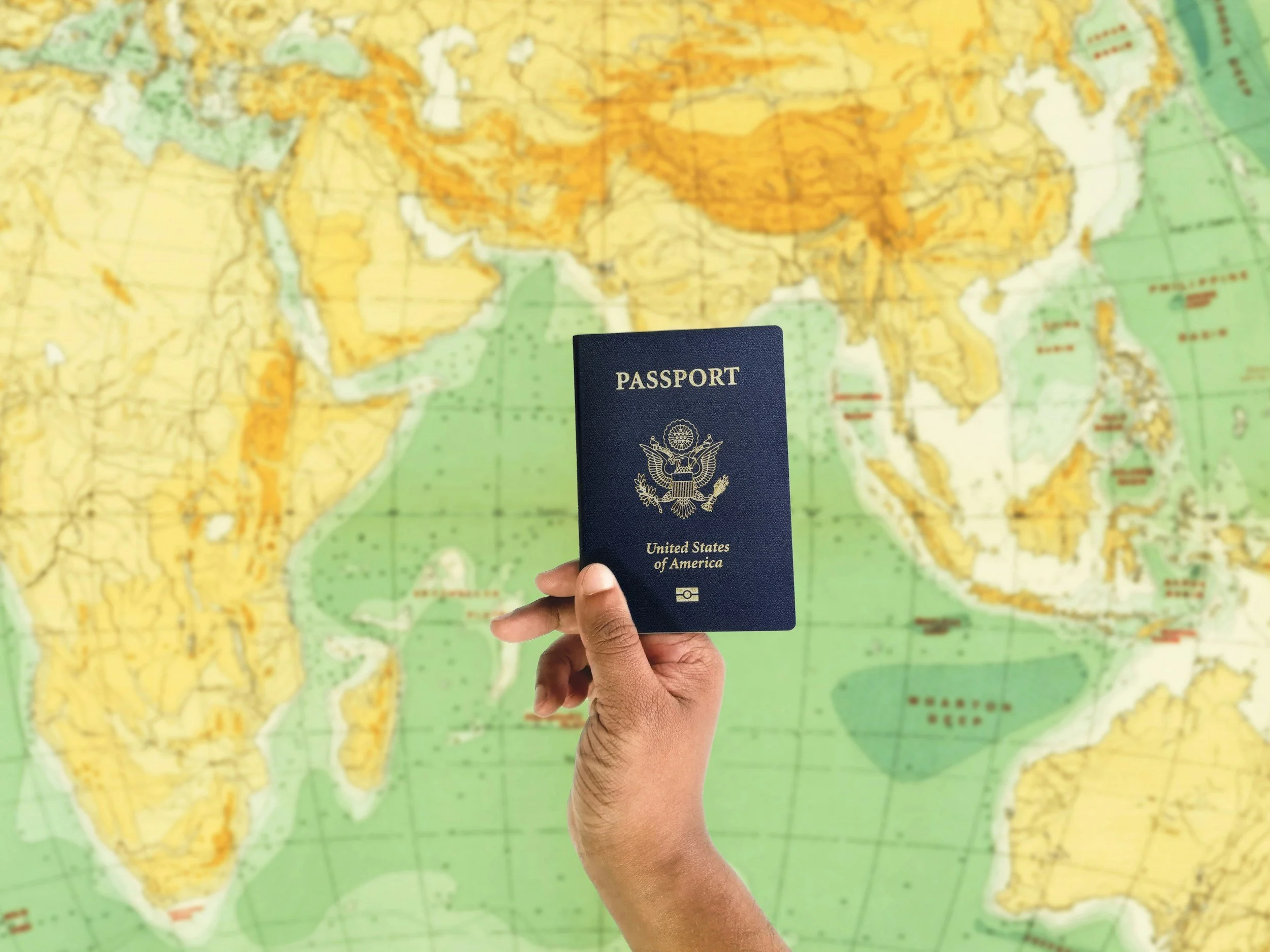
Visas - most foreigners travelling to India will need some kind of visa. Check your country’s consulate advice on this. India operates an e-visa scheme for 181 nationalities. If you’re eligible for an e-visa, then this is likely the easiest way to apply for a travel visa, as it doesn’t require visiting a physical embassy or consulate before you travel. Through this scheme, it’s possible to apply for a 30-day short-stay tourist visa that allows you to enter the country twice in that period. For longer-term travellers, you can also apply for 1-year or 5-year tourist visas, which will cap the number of continuous days you can stay in the country to 90 or 180 days, depending upon your nationality. Make sure you apply for an e-visa via the official government website (look for the .gov.in domain name in the website) as there are many scam sites that look official, but will charge you an additional fee to process your visa for you. The website is also a little unreliable. So be prepared for it to crash on you a few times, and the frustration of having to fill in the same details multiple times after each crash. Make sure you save your application as much as possible to minimize the pain if and when the website crashes on you.
Travel Insurance - get worldwide coverage that includes India, and read the small print, particularly on medical costs. You will most likely not need to use it, but if you do get sick, you will want to know that you’re covered!
Vaccines - ask your doctor, pharmacist, or nearest travel vaccination centre what vaccinations you’ll need before travelling to India. The most common vaccinations you will need protect against Hepatitis A, Typhoid, and Rabies. If you plan on sexual contact, medical procedures or exposure to needles on your travels, then you will likely be recommended the Hepatitis B vaccination as well. Malaria medication is only recommended if you’re travelling to areas in India with a high risk of transmission. Again, talk to a medical professional trained in administering travel vaccinations before you go.
Book Your Train Tickets! - see section on travelling by train below.
What to Pack? - Check the weather forecast before you go, as temperatures and climate vary dramatically depending upon which part of the sub-continent you find yourself in. If in hotter climes, pack light, loose-fitting clothing. India is quite conservative when it comes to dress in many areas, so make sure you have clothing that covers your knees and shoulders, especially if you want to visit temples and other religious sites. There’s also the very practical benefit of covering up more in that less exposed skin means less sunburn, fewer mosquito bites, and therefore less chance of malaria or dengue fever. On the beach in places like Goa or Varkala that are heavily frequented by foreign tourists, shorts and swimsuits are fine, but get the vibe of the place a bit first before disrobing.

If you’re paranoid about waterborne illnesses, and there’s good reason to be, then a LifeStraw water bottle can be a good purchase, although bottled and properly purified water is generally fine without this extra precaution. Pack diarrhea tablets and other basic medicine to save you from having to find a pharmacy with a cold or on a runny tummy. Bring your own toilet roll if you use it. Public toilets often don’t have it as locals tend to use a water jet, and hotels often only provide you with the bare minimum. It’s not always easy to find either outside of the big cities - I’ve been on a few lengthy excursions in India from shopkeeper to shopkeeper in search of this precious commodity, and once you do yelp with excitement having tracked it down, they know that it’s a seller’s market. You should also bring tampons if you use them. They are also hard to find, although sanitary towels are more commonly available.
Pack suncream and a bug spray with a high concentration of DEET to help avoid dengue and malaria. The suncream in India often contains skin-whitening agents, and high-SPF creams can be hard to find. Bug sprays sold in India rarely contain DEET, preferring more natural ingredients like citronella, which is less effective at preventing bites. Bring a battery pack for your phone. Power cuts are common in India. Bring a traveller adaptor. Most Indian sockets will work with European plugs, but not always. Otherwise, you’ll need to use an adaptor.
Upon Arrival
Money - It is generally forbidden for foreign travellers to bring Indian rupees in cash into India. So it’s probably not a good idea to order rupees in cash before you go. The easiest alternative is to withdraw cash in rupees from an ATM when you arrive. International airports will all have ATMs, or if you’re landing in a big city, you can probably survive with a debit or credit card until you find an ATM with a lower transaction fee in town. I would recommend opening a travel money account with a company like Wise or Revolut, which allows you to open current accounts in multiple foreign currencies, including rupees. In the big cities in India it’s possible to use a debit or credit card at most hotels, restaurants, bars, and larger shops. Here, a foreign currency card is really helpful as you can tap your card as many times as you want without encountering the usual transaction fees that your bank back home will charge.
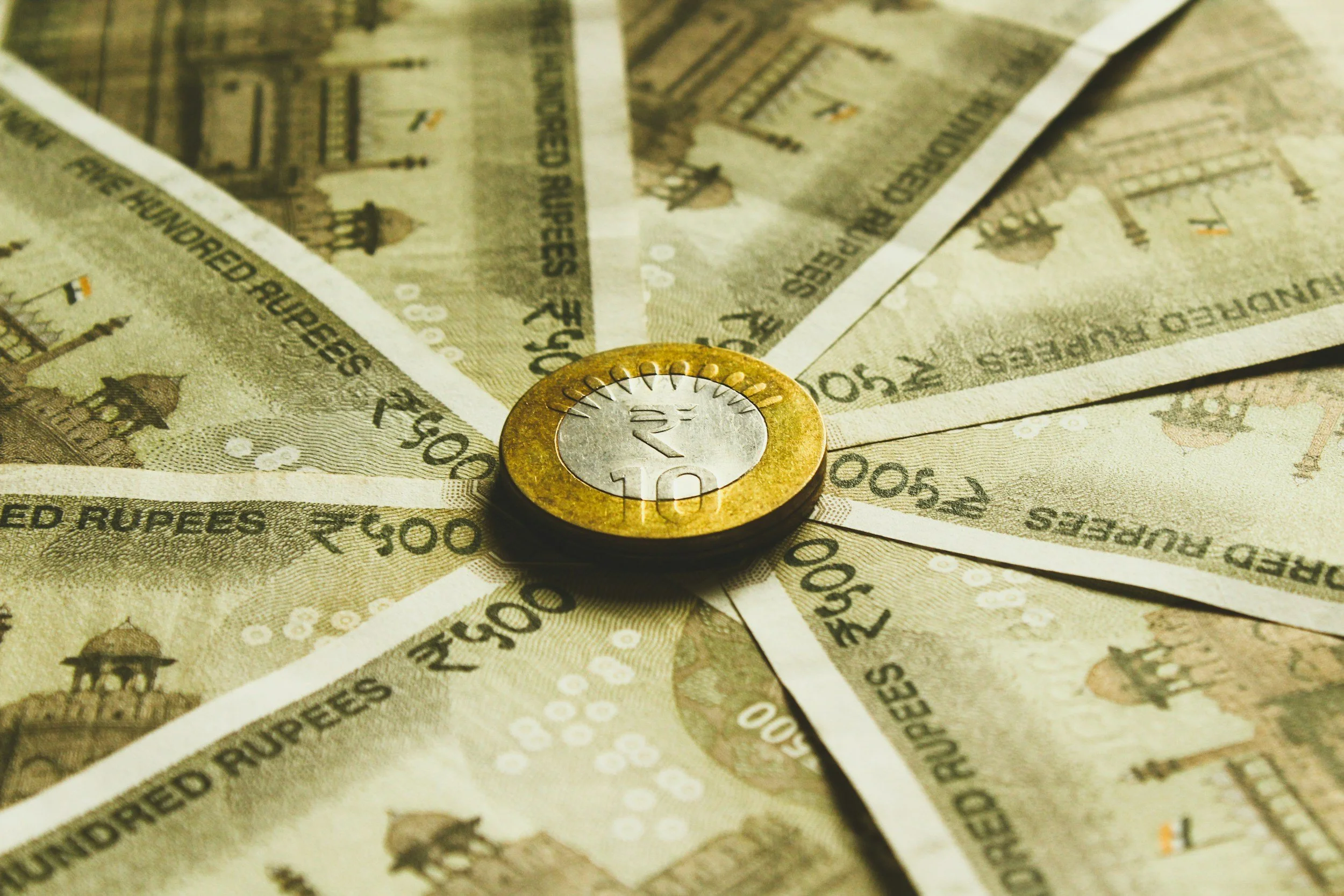
Outside of the big cities, however, things get a bit trickier, and in general, the more rural you go, the more cash is king. So if you’re heading somewhere more remote and without a working ATM, make sure you stock up on cash before you leave. Now here’s the snag: most ATMs in India set a 10,000 rupee withdrawal limit, which converts to just under 100 euros or just over 100 dollars. In more rural parts of India, I’ve had hotels that I’ve stayed in for multiple nights ask me to pay my entire food and accommodation bill in cash, which unless you’re on a shoestring, can easily add up to much more than 10,000 rupees. This means you’ll need to withdraw cash multiple times, and annoyingly incurring a transaction fee for each withdrawal. Most Indian merchants allow for payment via money transfer apps like PhonePe, Google Pay, or UPI, but these usually only work with an Indian bank account, so no use for the foreign traveller. Wise does offer an option to transfer money via UPI on its multi-currency account, but you’ll need to input a lot of details into the app for it to work, so only try it if you’re not in a rush. In general, whenever you leave the big cities, it’s a good idea to have cash with you, and assume that the ease with which you’ve hitherto used your debit or credit card in a place like Delhi or Mumbai will rapidly disappear once you head out into more rural areas.
Mobile Phone - It’s possible to buy an e-SIM before you go, but usually these are just for using data and won’t provide you with an Indian phone number. Your mobile phone network provider back home might also sell international “data packages” that allow you to use data roaming in India for an affordable price. Check this before you go, however, as not all providers will offer this. As with an e-SIM, however, this also won’t provide you with an Indian phone number. This can be a problem. Many apps and websites in India require you to log in using an “OTP” code that is sent to your mobile phone, and often it only works with Indian phone numbers. It’s also just quite useful to be able to call restaurants, hotels, or other businesses and services when you’re on the move. But, officially at least, getting an Indian SIM card is not straightforward, requiring a bureaucratic exercise and a multi-day waiting period to get set up.
There are, however, some less official ways to get hold of an Indian SIM that bypass the paperwork. Ask the owner or concierge at your hotel if they can help you get hold of one. If you’re met with a blank expression, then take a walk to the nearest busy shopping street and keep your eyes peeled for places advertising SIM cards to tourists. It might take a bit of wandering and asking around, but many places in India sell prepaid SIM cards with an Indian phone number and a month of unlimited calls and data for an affordable fee of around 1,500-2,000 rupees.
Getting Around India
Trains - by far the easiest and cheapest way to travel around India is by rail. For long-distance travel, book your tickets well in advance. Trains are frequently full, and the higher-class carriages tend to sell out very fast. The official Indian Railways (IRCTC) website is an absolute nightmare to use, especially if you don’t have an indian phone number and bank account. Do yourself a favour and pay a small booking agent fee with 12GoAsia, and use their website or app to buy your tickets. It will save you hours of anguish with the IRCTC website, as it crashes on you continuously.
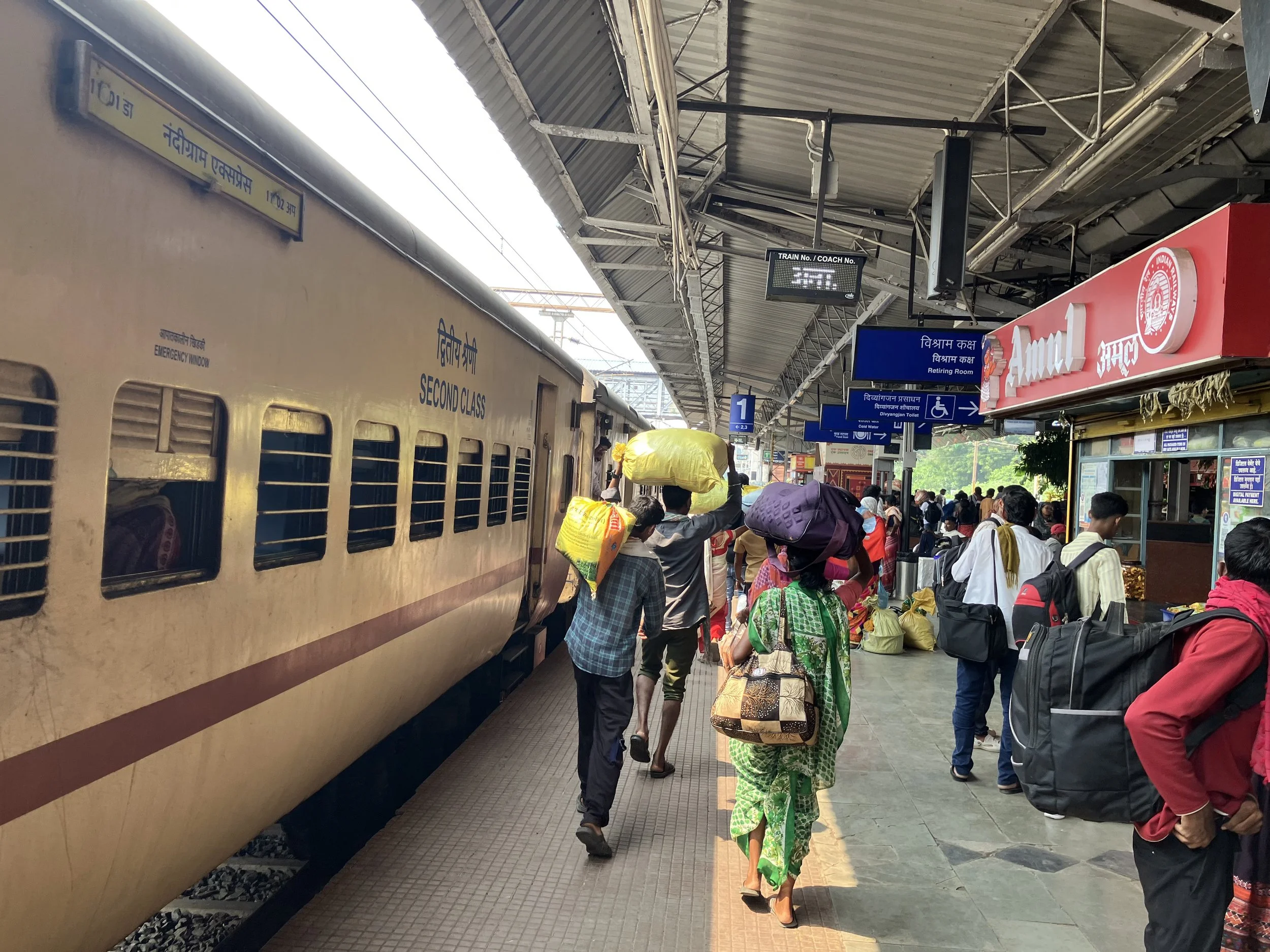
Detraining at Chandrapur
If you want to meet a lot of inquisitive locals and can stomach cockroaches, mice, and foul toilets, a third-class ticket can be quite an experience. But if you want a more peaceful ride and a bit more cleanliness, then book yourself on second or first-class carriages. Again, these higher-class tickets tend to sell out fast. If you haven’t pre-booked your tickets, then it’s sometimes possible to pick up tickets that are reserved for foreign travellers, or become available at the last minute, as certain ticket quotas are sometimes held back from release until near departure. This method, however, by no means guarantees you a ticket, and if you want to be sure that you’re going to get somewhere on a certain date, then you’ll need to book in advance.
Buses - you can also travel in India by bus. Sometimes this can even be faster than taking the train, depending upon the roads. In general, however, it’s much more comfortable to travel by train. The roads in India can be bumpy, and depending upon the topography, windy. Bus tickets don’t tend to sell out as fast as the trains, so it can be a good alternative if the train is no longer an option. You can buy tickets in advance on websites like redBus.
Flying - domestic flights are often quite cheap compared to flights in Europe or the US, but still considerably more expensive and worse for the environment than taking trains or buses in India. If you want to see and experience India, then take the train. But of course, sometimes over very long distances, you don’t really have a choice. You can search for domestic flights at all the usual price-comparison websites.
Uber/Taxi/Auto-Rickshaw - Uber can be a godsend in India, although I have mixed feelings when I use it there. On numerous occasions, I’ve had taxi and rickshaw drivers try to negotiate a fee for a ride with me and then look crestfallen when I show them how absurdly cheap the same ride will be if I just book it with Uber. It tilts the negotiating scales in the customer’s favour, and maybe, just maybe, local taxi drivers should be able to rip off relatively wealthy foreign tourists just a little bit. It’s a dangerous and difficult job. But Uber is not universally available in India. You can use it in almost all major cities, but there are fewer available cars the more rural you go. You cannot use Uber in Goa following a statewide ban in June 2025. The state government operates an equivalent ride-hailing app called GoaMiles, but it’s a little less reliable than Uber, and requires an Indian phone number (see above) to sign up, and you have to pre-pay credit onto the app to use it. Nevertheless, I used it quite a bit when I was in Goa, and in general, it did make things easier. Just don’t expect drivers to come get you if you’re in more remote parts of Goa.
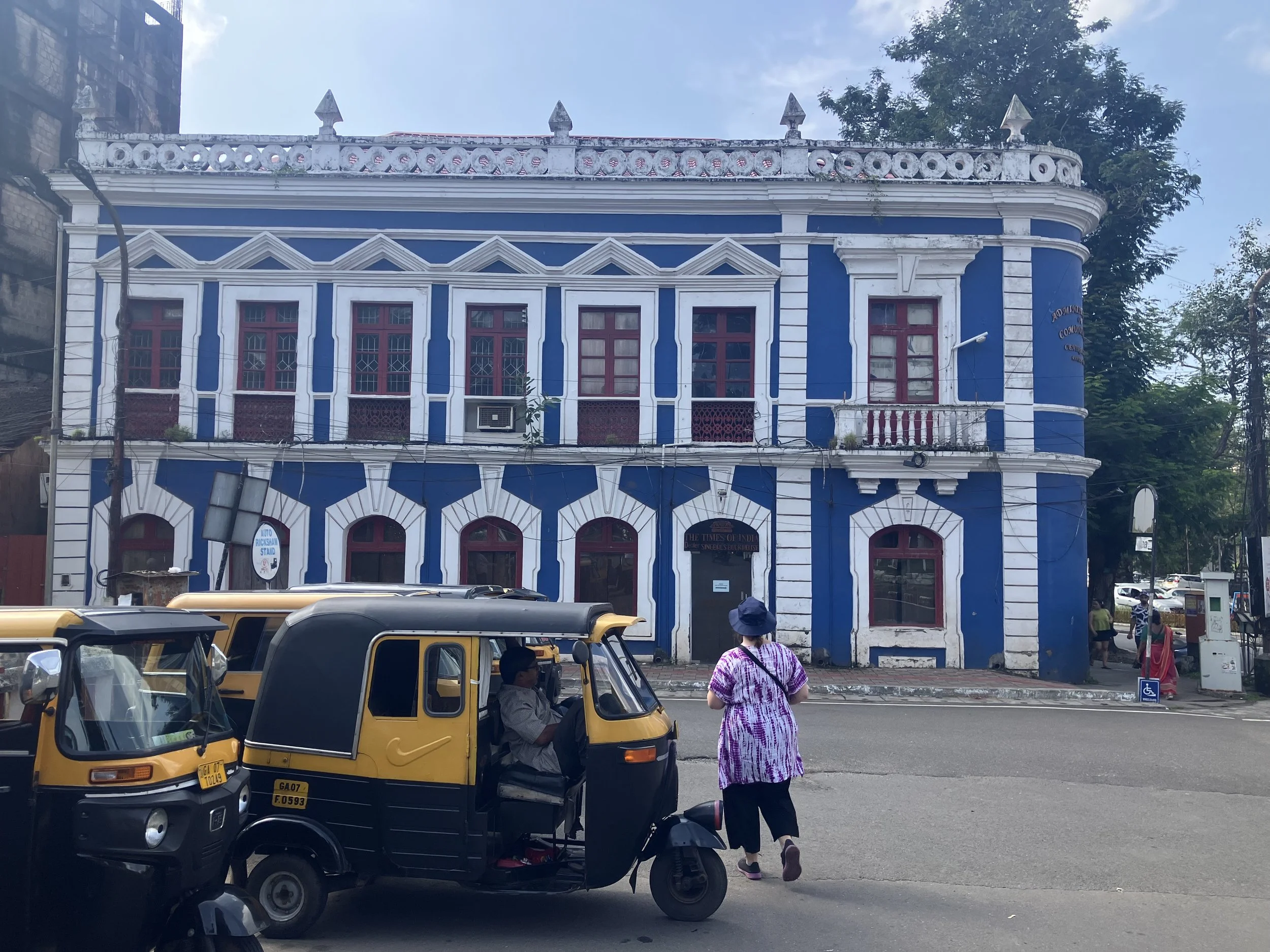
Auto-rickshaws in Panjim…
Auto-rickshaws and local taxis are also abundant in Indian cities, and it usually shouldn’t take you very long to find one. Just stand on the side of a busy road and hail an empty one down if there aren’t any parked anywhere nearby. You’ll want to negotiate the fee before you go, and yes, it will be more than taking an Uber.
Moped Rental - moped rental opportunities are common in India, and it can be a good option to get between villages or towns in more rural areas. In the big cities, though, I’d strongly advise against riding your own moped as the traffic is often chaotic. Let the more experienced local taxi driver handle it for your own safety, and usually for less than it would cost to rent a moped for the day anyway. If you do decide to rent a moped, ask for a helmet, go slow, and be careful. Roads in India are often in disrepair, and traffic can be notoriously chaotic. Check that your brakes work. Rental bikes are often not in the best condition.
Health & Safety
India is a relatively safe country to travel in, and as you can see in the previous section, relatively easy to travel around. I have been on two separate month-long trips across India, and I’ve never been the victim of a crime, nor have I gotten seriously sick or injured. That said, like anywhere on earth, there can be dangers, and it’s good to have your head screwed on and take a few precautions.
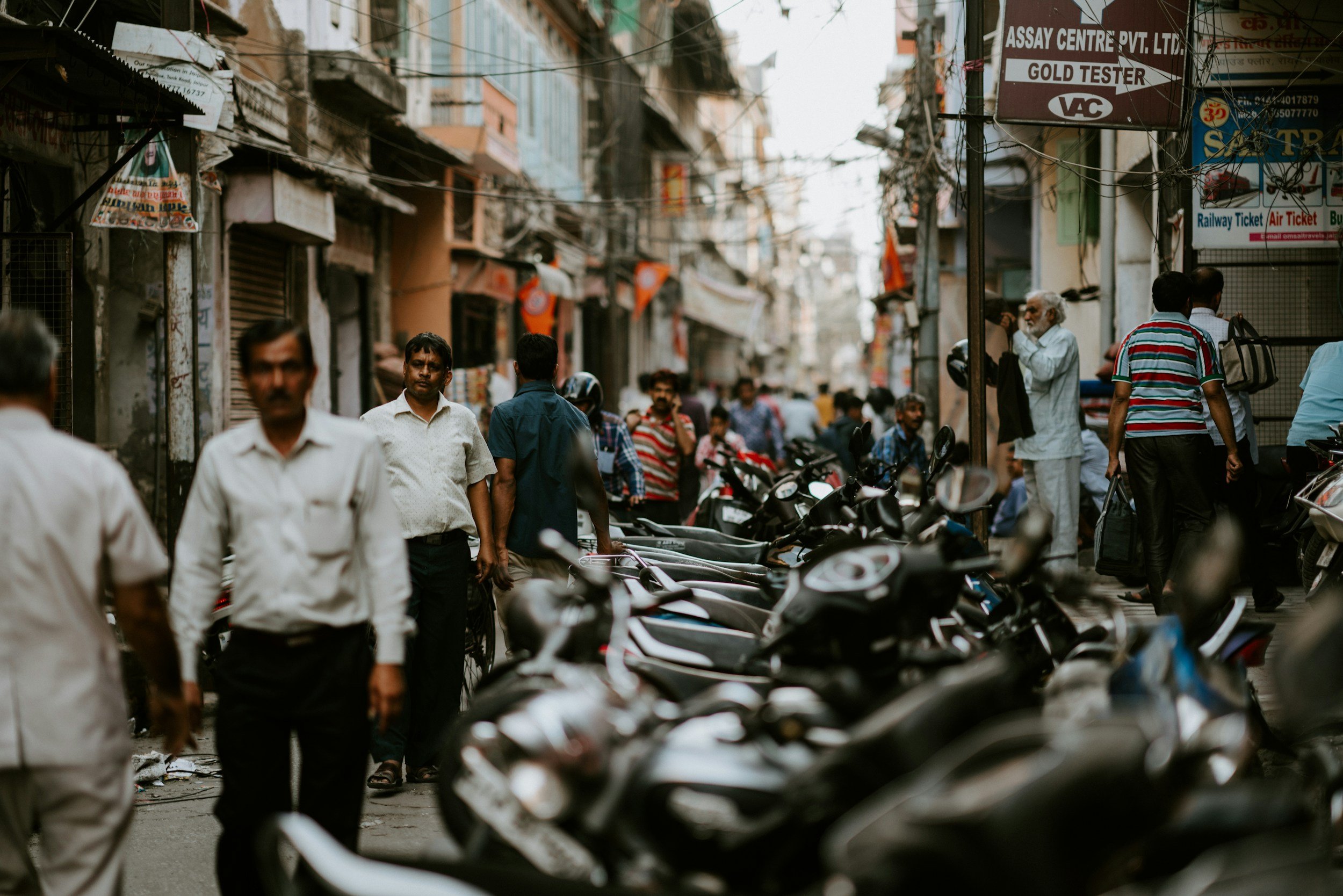
Crime - overall, crime against tourists is relatively low in India, although this can vary from region to region. Petty crime, such as pickpocketing, bag-snatching, and a variety of scams, is more commonly experienced, whereas violent crime against tourists is rare. You will often find yourself in busy or crowded places in Indian cities, and this is fertile ground for pickpockets. Try to keep your valuables somewhere you can see, and I always tend to split my money up and store it in different places to spread the risk.
Solo Female Travelling - of course, I’m a big pot-bellied man, which tends to help when chasing away hasslers, and might skew my perception of safety differently from a solo female traveller. That said, many women can and do travel alone safely across India, so don’t be deterred. Like in many parts of the world, women can unfortunately experience street harassment from lewd men, and more serious forms of sexual assault do occur. Women-only train carriages exist on many Indian trains, and women-only waiting rooms at stations are also common. If you’re a woman thinking about travelling solo, there are many great websites and blogs written by women with great practical advice.
Food & Water Poisoning - although the fabled “Delhi-belly” is over-stated, and I’ve never personally gotten sick in India, it can happen. My best advice is to be particularly cautious with water. Only drink water that is bottled, or that your hotel or restaurant has clearly told you is purified. If you’re being extra-paranoid, drink from a LifeStraw. Use bottled or purified water to brush your teeth. Don’t drink the water in the shower. Watch out for fruit-and-veg sellers that spray their produce with unpurified water. Be careful with street food that contains water, like “pani puri”. If eating street food, look out for popular places. If lots of people like a place, then it probably hasn’t given too many people food poisoning. Some street food vendors are registered with the Food Standards and Safety Authority of India (FSSAI), which means they agree to use clean water and adhere to certain basic hygiene standards. Look out for a visible FSSAI registration number. In many Indian cities, there are now “clean street food hubs”, or areas where lots of street-food vendors cluster that have been declared “safe” by local authorities after undergoing food safety training and inspections. Most established restaurants are pretty safe - look for lots of reviews on Google. If they’ve been there a long time, chances are they haven’t made a habit of poisoning their customers.
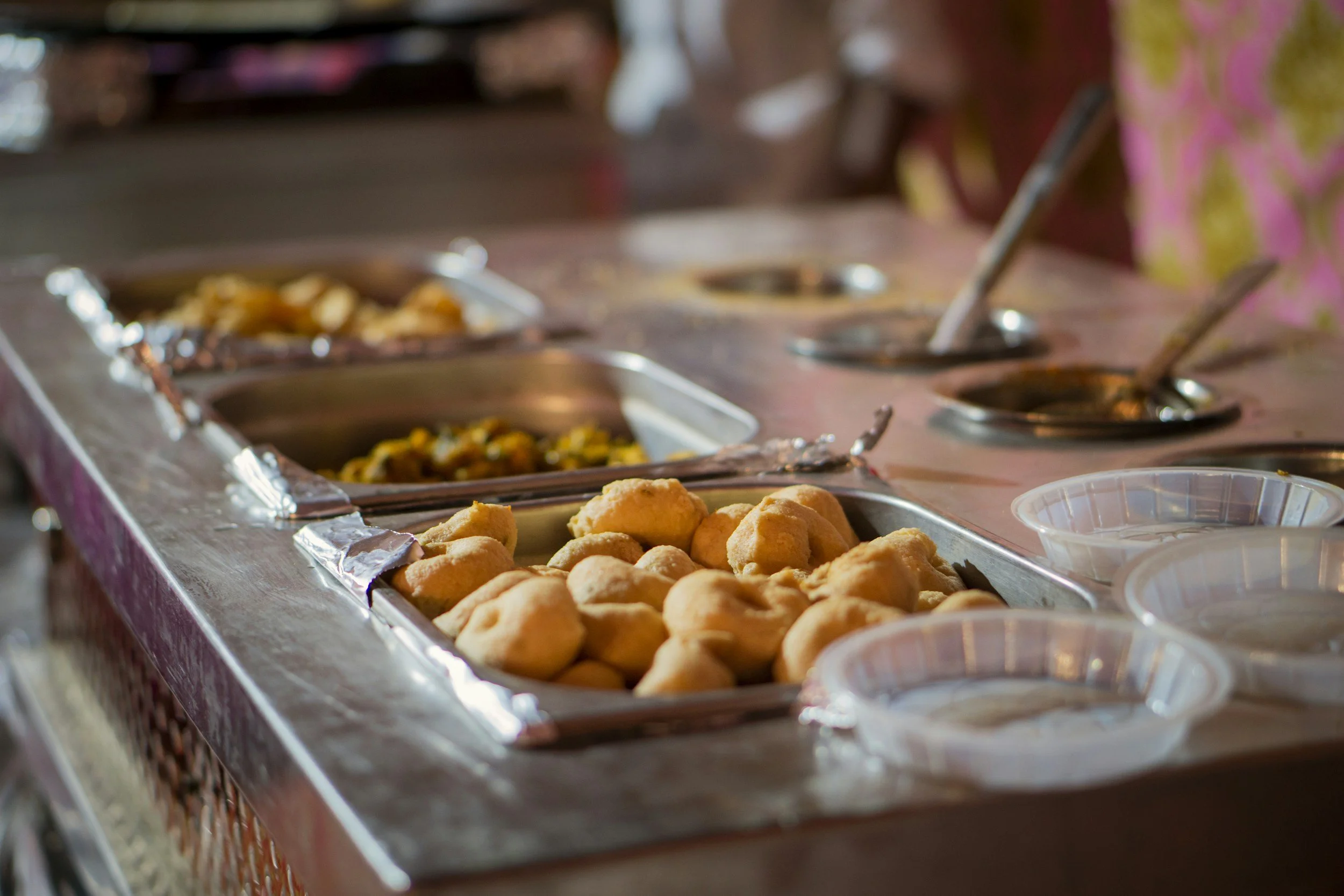
Make sure the water in your pani puri is purified or bottled….
Other Dangers - beware of uneven pavements, holes in the ground, and trip hazards! It’s remarkable that I’ve survived India twice without a sprained ankle. Take a torch with you at night, especially in more rural areas, so that you can see where you’re stepping. Watch out for cows! They’re generally very docile, but I did once get nose-butted by one when I got too close. It was just a friendly warning, but a warning nonetheless. There are venomous snakes in India, but they generally don’t like people, and it’s unlikely that you’ll see one. Just be aware if you’re walking through brush. There are jellyfish in some coastal waters, and sharks, although shark attacks are extremely rare - there have been just 21 reported unprovoked shark attacks in India in 444 years. Although I’ve never seen a road traffic accident despite travelling extensively in India, I’m frankly a little surprised that I haven’t. Traffic, especially in big cities, is indeed quite chaotic, and rates of road accidents are statistically high relative to other countries. Crossing busy roads also often entails a leap of faith, where you simply have to walk out into oncoming traffic, and hope that it slows down. Follow locals that look like they know what they’re doing when crossing the street if you can!
Just Go For It!
Seeing all these dangers laid out in one place like this can be intimidating. Don’t let them be. It’s important to know the risks, take precautions, and be prepared if things do go wrong. But in all likelihood, you will have an incredible adventure free of sickness and crime. Despite the dangers, India is a relatively safe country, full of kind and helpful people. Trust your instincts, don’t be an idiot, but also don’t be afraid. Unless you are incredibly unlucky this is a place that will make you feel welcome.