A Cultural History of Eight Iconic Mumbai Street Foods
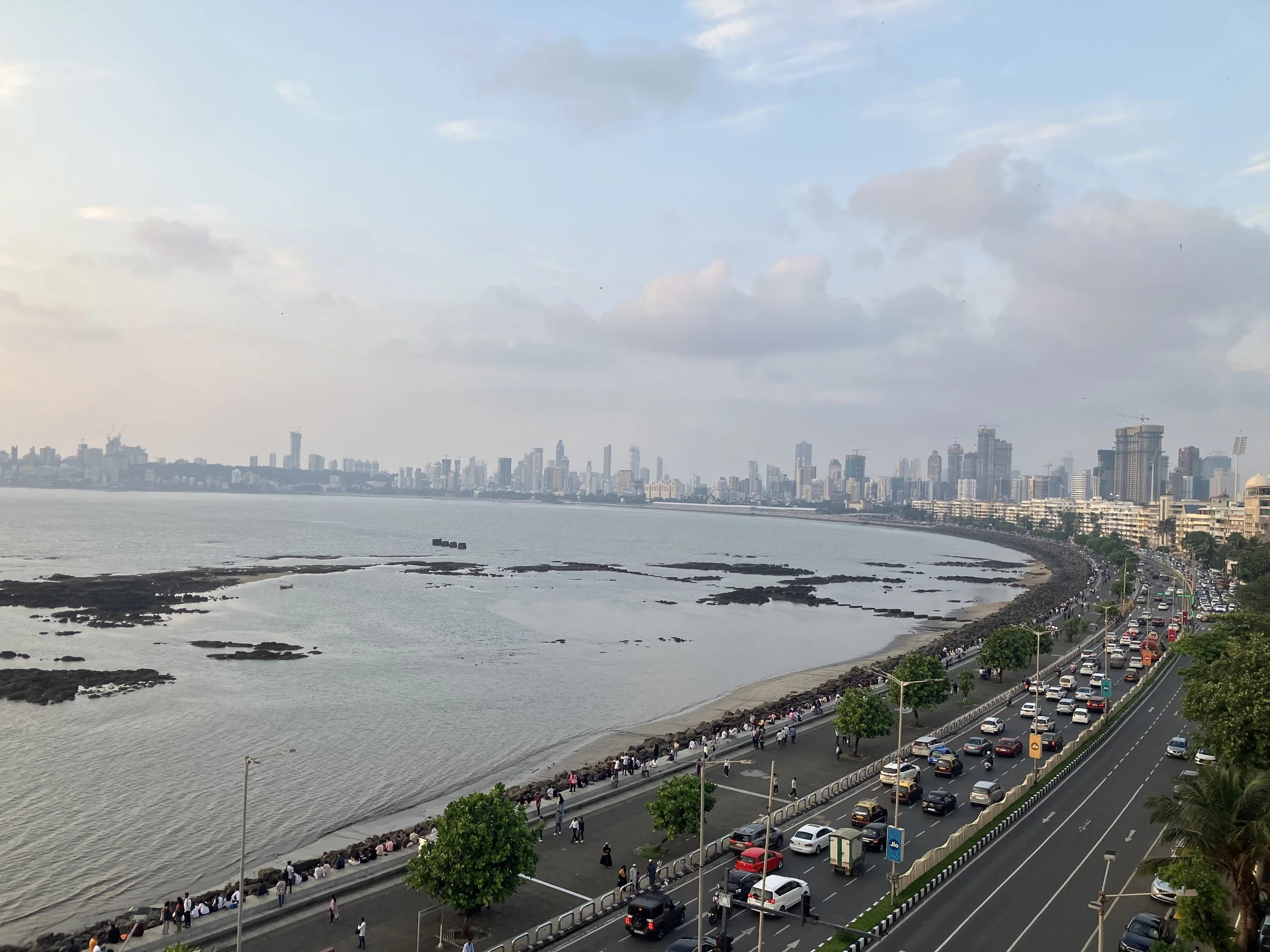
Mumbai is a city of travellers. Almost half of its enormous population came from elsewhere. For centuries, and still today, it has existed as a contact zone between migrants and traders, colonialism, and proud assertions of local and nationalist identity. Its food is a major part of that identity, in spite of, indeed perhaps because of, the rich tapestry of cultural exchange, both violent and peaceful, that comprises its culinary heritage. Mumbai’s food reflects its global origins, but it exists always, irrefutably, on its own terms. It was more than just symbolic that the spark that ignited Bombay into one of the great epicentres of mass protest during the struggle for Indian independence was Gandhi’s refusal to pay tax to the British on that most elemental food commodity: salt.
Mumbai is a city of travellers in another sense too: people are always on the move. You’ve seen the images of the crowded commuter trains, the heaving traffic, the network of delivery workers distributing 200,000 tiffin lunchboxes daily to busy office workers who are still in want of a home-cooked meal. Mumbai emerged as one of the world’s great street food capitals not to impress Instagrammers and tourists, but out of the necessity to provide quick, cheap and tasty food to its busy and largely migrant industrial, and increasingly post-industrial, workforce.

Over 200,000 home-cooked meals in tiffin lunchboxes are delivered to busy Mumbai workers via a complex delivery network every day.
In what follows I trace the cultural histories of eight iconic Mumbai street foods that every visitor to the city should track down. In each bite of these delicious dishes you will find stories of migration, global trade, colonialism and proud assertions of local and national identity. Like the city’s itinerant population, many of the components of these dishes trace their origins to somewhere beyond Mumbai. Yet when these components are brought together and fused with local culture, all of them are iconically, and somehow unmistakably, from Mumbai.
Eight Iconic Mumbai Street Foods
Vada Pav - aaah the ubiquitous vada pav! The most popular of all Mumbai street food snacks, and with good reason. It is, essentially, a deep-fried potato pattie served in a bun, and seasoned with chilli powder and dollops of chutney. The word “pav” refers to the soft-white bun that accompanies a number of well-known Mumbai street food dishes, and is derived from the Portuguese word for bread: “pão”. The Portuguese introduced oven-baked wheat-based leavened bread (pão) into Goa during the 16th-Century. Other types of unleavened bread have ancient roots in India, long before European colonialism. From Goa, “pão” spread north along the coastline to Mumbai, as Goan migrants set up bakeries that spread these Portuguese-inspired baking practices. In the 19th and early 20th centuries, industrial baking techniques developed the softer mass-produced rolls known as “pav” in Mumbai today. This coincided with a growing industrial labour force in Mumbai, and “pav” quickly became popular among them.
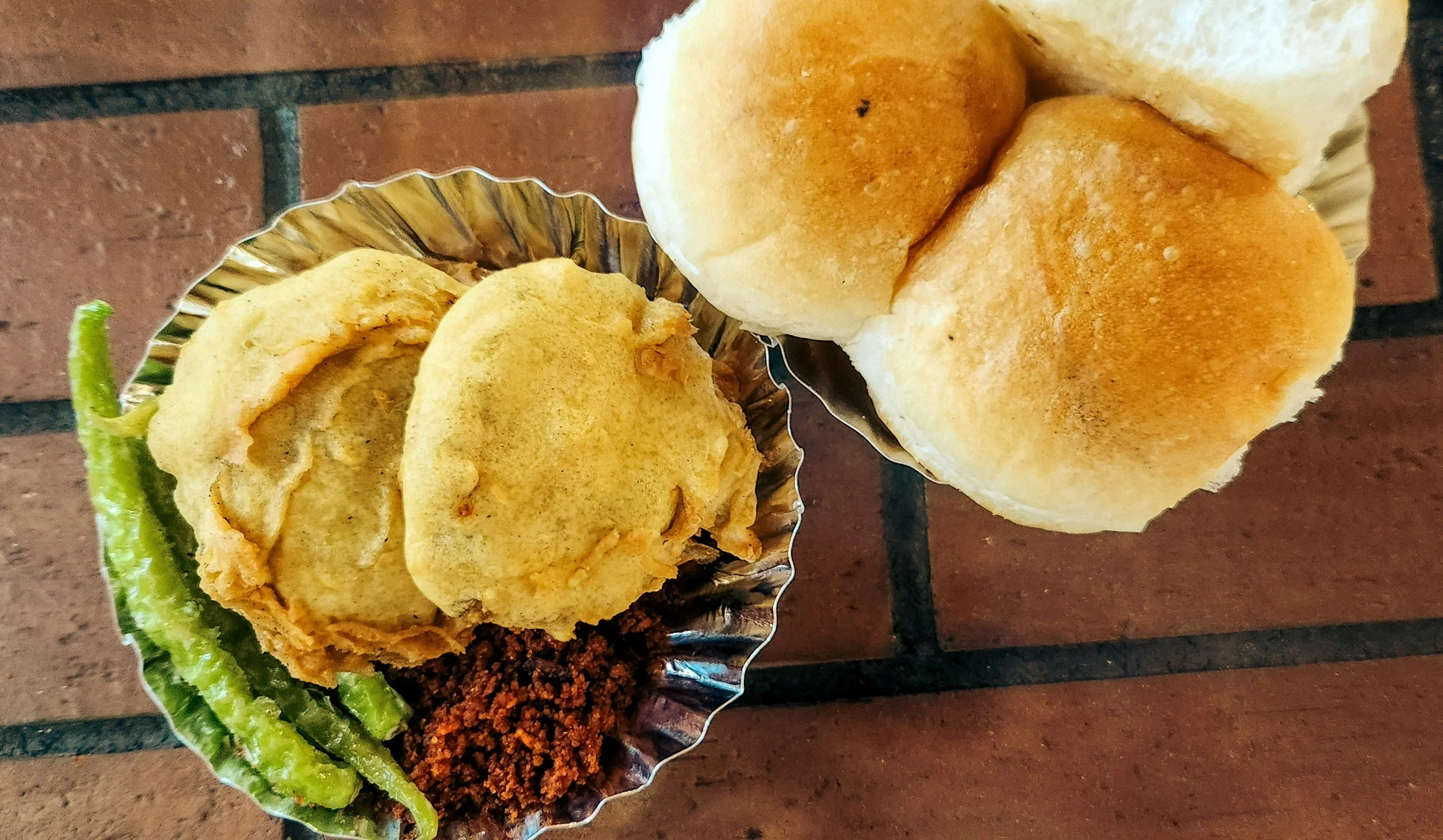
A pair of vada pavs…
The “vada pav”, which combined these pav rolls with the now-iconic spiced potato-patties, was invented by a street-seller named Ashok Vaidya in the 1960s, who set-up shop outside the busy Dadar train station, once again meeting the need of hungry industrial labourers, in particular mill workers, who were in need of a quick, cheap, filling, and portable snack on their way to-and-from the factories. During the 1970s and 80s the vada pav grew in popularity among mill workers during tumultuous times for their industry. Mass strike actions met the threatened closure of the textile mills, and as people were put out of work, some set-up their own vada pav stalls, and the snack began to spread. As a result the vada pav became both a cheap and convenient source of sustenance as well as a symbol of working class Mumbai culture.
I must admit a deeply personal affection for the vada pav. For a long-time I lived in a place called Hull, a proud post-industrial town in northern England. Hull is the home of the “pattie-buttie”, which absent the chilli and the mixture of Indian spices, is more-or-less the same thing as the vada pav, a fried potato pattie served in a soft white roll, or “breadcake” as Hull locals call it. Interestingly, both the pattie-buttie and the vada pav emerged out of similar conditions: the need to provide a cheap and portable snack to hungry dock, factory and mill workers. There’s a great global history to be told of the humble potato pattie, and its role in working class movements across the world.
Today vada pav is ubiquitous in Mumbai, and they’re almost always good no matter where you buy yours from. We particularly enjoyed Arram Vada Pav, perhaps in-part because we were rushing to catch our train at the iconic CST railway station across the road, which felt like the appropriate way to eat the snack, but you’ll find great vada pavs and have locals recommend top spots all over Mumbai. This is simply a must-try when you’re in Mumbai.
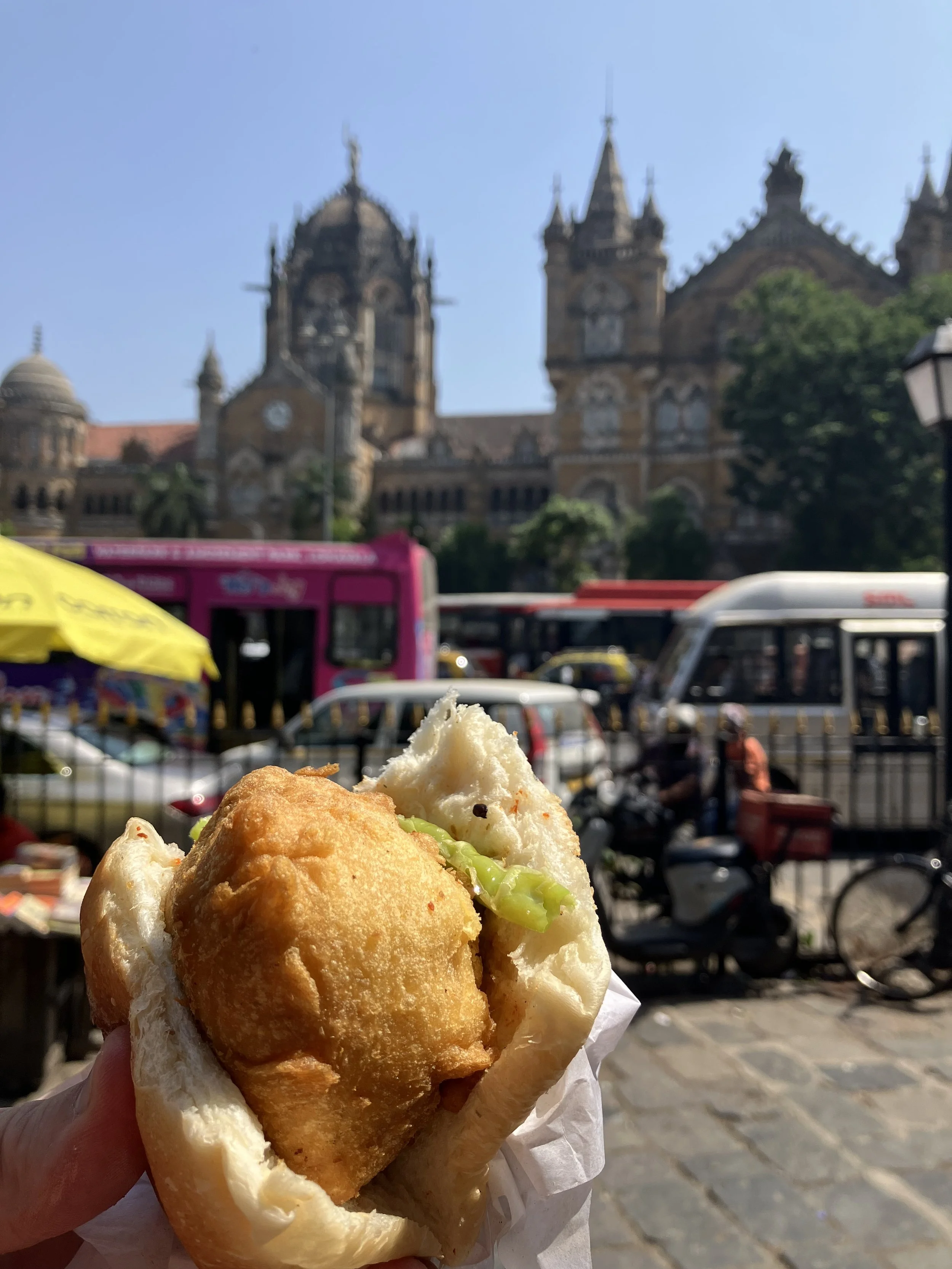
Eating a vada pav from Arram’s, opposite Mumbai’s iconic CST railway station.
Pav Bhaji - ok so you know what “pav” is now, so I don’t need to explain that again. The “bhaji” here does not refer to the deep-fried vegetable fritters, such as “onion bhaji”, that you might have encountered already back home. Bhaji here is, rather, a kind of warming vegetable curry often combining cheap ingredients such as carrots, potatoes, chillies, peppers, tomatoes and aubergine. Somewhat unusually, street sellers often heat this wet curry on the tawa, which is predominantly used for dry-frying. The technique allows for more water evaporation to thicken the curry and take on more flavour from the pan. Like the vada pav, the pav bhaji originated as a dish to provide quick and cheap sustenance to hungry mill workers, although it predates the vada pav by more than a century. It was popularised during the American Civil War in the 1860s, when a surge in demand for Indian cotton to replace rapidly declining U.S. exports, produced a booming and increasingly hungry textile factory workforce in Mumbai.
We first tried pav bhaji at a street-food seller on Chowpatty Beach, but again you will find this dish everywhere in Mumbai.
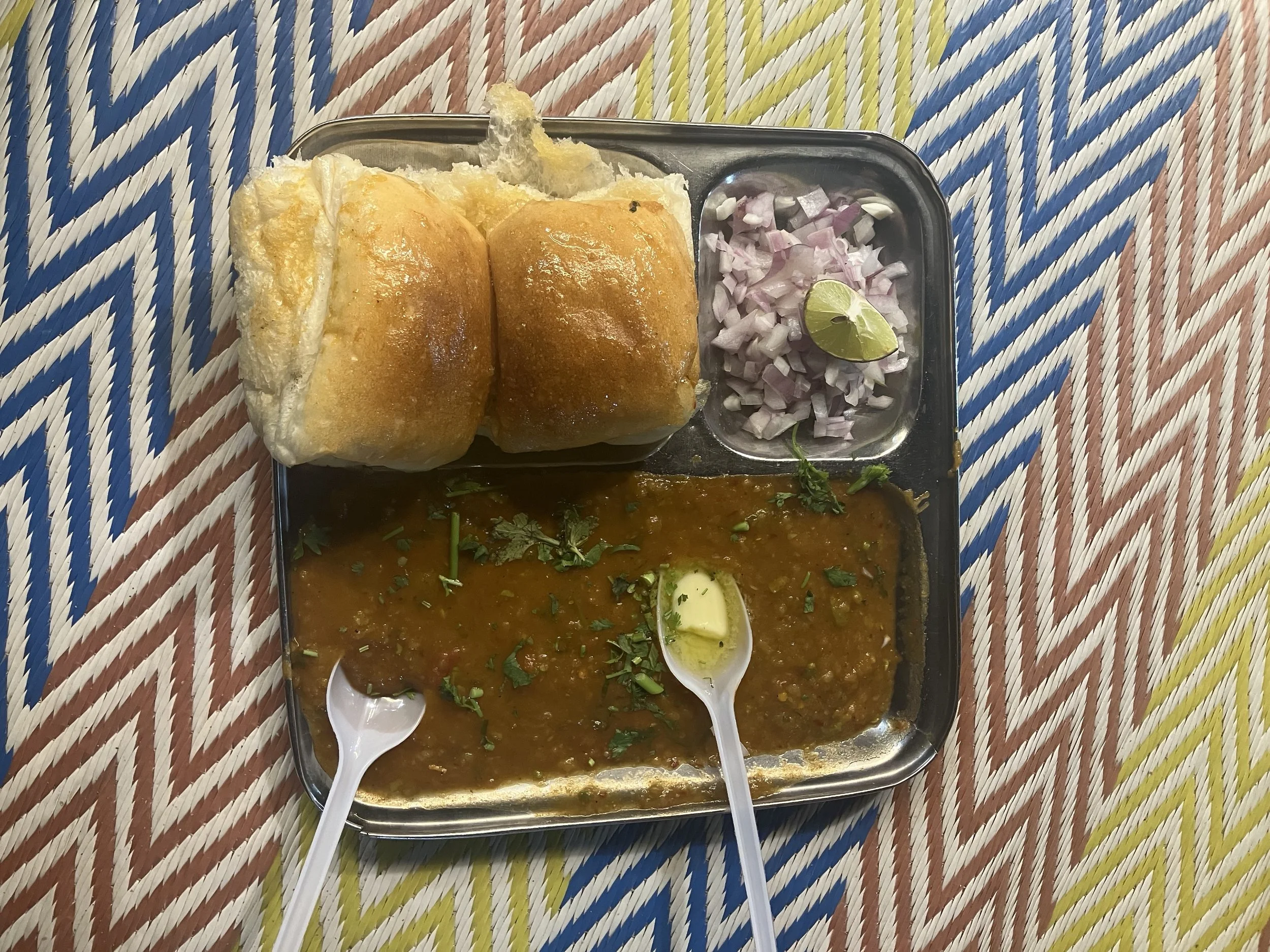
Pav Bhaji Eaten on Chowpatty Beach.
Bhel Puri - Chowpatty Beach is perhaps more famously associated with another iconic Mumbai snack: bhel puri. This dry mix of puffed rice, sev (a kind of crispy dry noodle), peanuts, onions, tomatoes, and a variety of other possible additions to the crispy base mix, is then topped with spicy-green, red-garlic chilli, and sweet-tamarind chutneys, to produce that characteristic spicy, sweet and tangy flavour. You can find a great recipe for homemade bhel puri over at Swasthi’s Recipes, one of my go-to websites when I want to try to recreate back home some of the flavours I enjoyed in India.
Although modern bhel puri emerged in Girgaon Chowpatty in the early 20th Century as street food sellers sought to supply the growing Mumbai ritual (still popular today) of eating on the beach, it was the product of “chaat culture”, brought to Mumbai via an earlier wave of migration from Uttar Pradesh and other parts of Northern India during the 19th Century. Chaat encompasses a range of dry, tangy, spicy and savoury crispy snacks that can be assembled quickly by street vendors and eaten on-the-go. These migrants from Northern India brought with them a range of chaat recipes that were later adapted to include ingredients and flavours local to Mumbai.
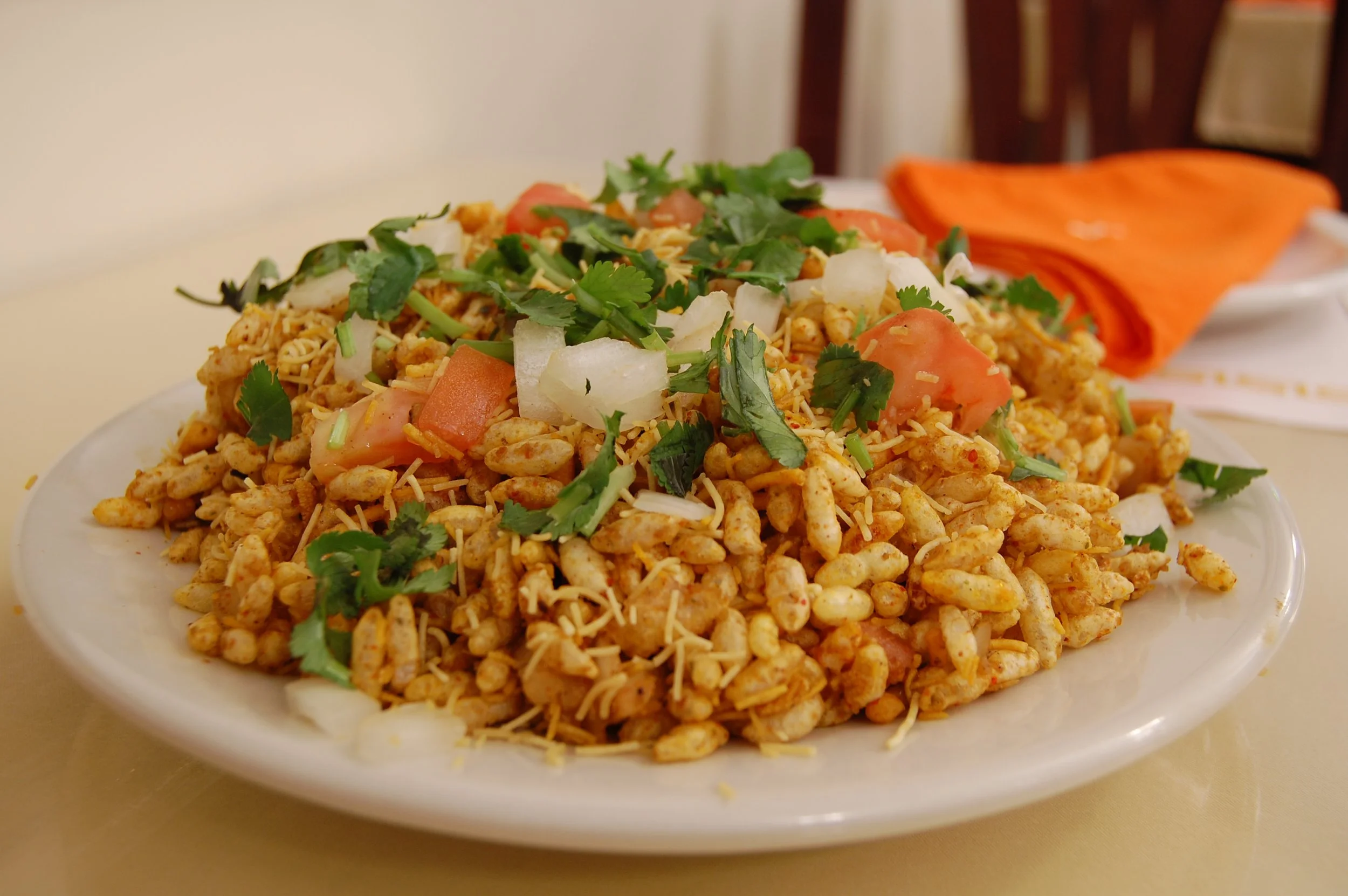
Bhel Puri.
Sandwich Culture - in a previous blog post I described the experience of eating Indian food in India as something that is paradoxically both novel and familiar. For me personally, there are few things more familiar in Indian cuisine than the sight of the cheap white sliced bread I grew up eating eating as a kid in the United Kingdom. And at first, this familiarity was a barrier to entry for me into Mumbai’s sandwich culture. Why eat something that looks so familiar, when there’s so many things to try that I’ve never seen before?
This was a mistake. Mumbai sandwich culture is a thing. It’s a big thing, and you’ll often find a variety of sandwiches on the menu at street food stands, as well as at vendors dedicated to the art of the Mumbai sandwich. Although there are many varieties, there are a few consistent features of the Mumbai sandwich: they are almost always vegetarian, they include a green coriander and chilli chutney, often with a tangy-sweetness to reflect Mumbai tastes, they’re stuffed with layers of raw vegetables (beetroot, cucumber, tomatoes), they’re served on cheap white bread that is toasted in a gas stove press, and they’re garnished with a chaat masala.
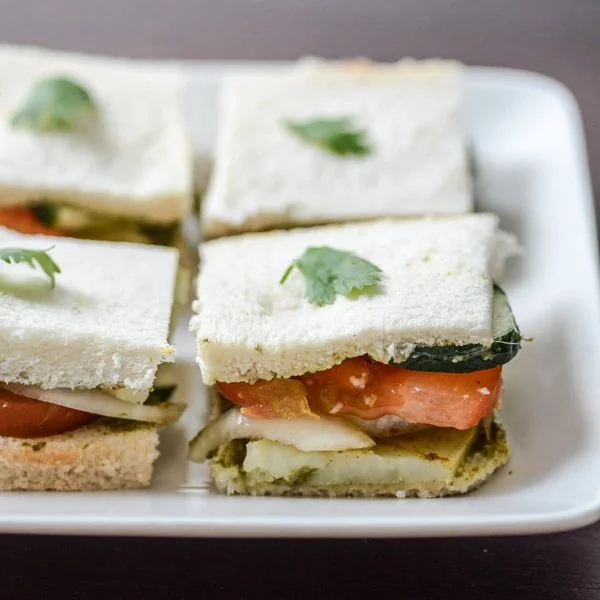
A Mumbai sandwich…
As with the pav bhaji and the vada pav, the Mumbai sandwich emerged out of mixture of colonial influences (the white bread sandwiches brought by the British), industrialisation and migratory patterns (the arrival of people in large numbers from Uttar Pradesh, Gujarat and Maharastra to work in mills in the 1930s-1950s during the textile boom who were in need of quick, inexpensive, vegetarian food), and the later adaptation of these influences to make use of local ingredients leading to something that has both clear foreign influences, but is nevertheless uniquely Mumbaikar. Both novel and familiar. This later phase of adapting the sandwich to something uniquely local took place in the 1960s-70s, when the sandwich became the lunch of choice for the growing student population in Mumbai, as well as for busy commuters who likewise wanted something cheap, portable, quick, and vegetarian. Street vendors also realised that the sandwich required no frying on the tawa, and very little fuel, making it perfect for mobile street-food carts. During this boom in the sandwich’s popularity in Mumbai, vendors began to experiment with local ingredients and flavours like beetroot, chaats borrowed from northern Indian migrants, and more sweet-tangy masalas. Out of this fusion of influences and interests, the Mumbai sandwich that is loved today throughout the city, was born.
Bun Maska - the missing link in the above story of the emergence of a distinctly Mumbai sandwich culture is the role of Parsi bakeries and cafes in popularising sandwich-eating among Mumbaikars. Without them, sandwich-eating might well have remained a distinctly British habit, confined to the colonial spaces of officer messes, railways canteens, and club kitchens. Parsis are the descendants of Persian Zoroastrians who fled to India from religious persecution, with a large community settling in Mumbai. During British colonial rule Parsi bakers, already skilled in producing oven-baked leavened bread, began making British-style breads to sell to colonising expatriates. Over time Parsi cafes sprang up throughout the city that would serve these breads, sandwiches and other baked-goods alongside sweet milky cups of tea, or what became known as Irani chai. Over the decades these cafes became increasingly popular with local Mumbaikars, partly because they provided inexpensive sustenance at busy locations near train stations and mills, and partly because everybody was welcome regardless of caste, creed or gender.
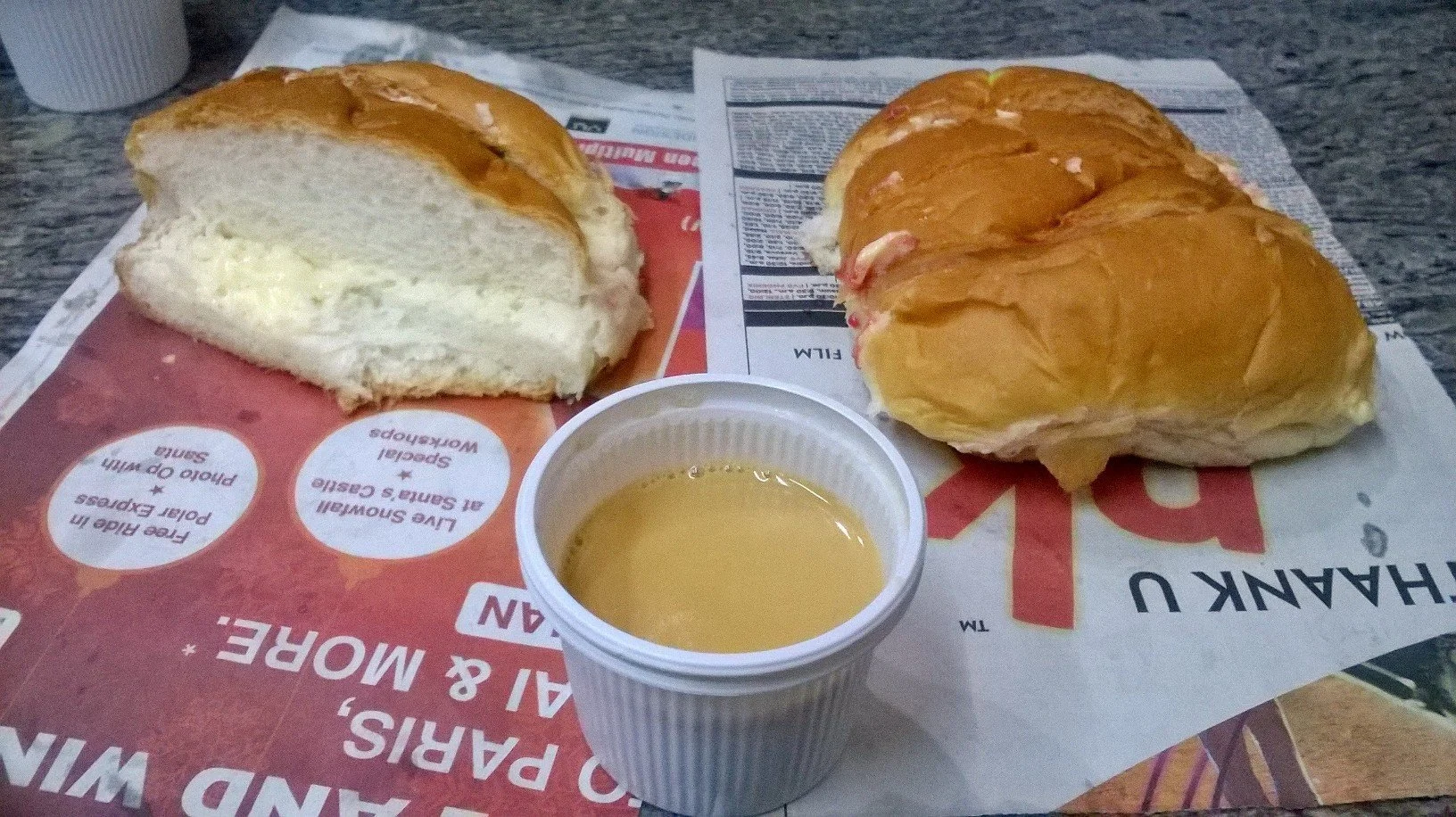
Bun maska, served with Irani chai.
Enter the bun maska…. We might see this as one of the primogenitors of Mumbai sandwich culture. This very simple snack (“bun maska” literally translates to “bread and butter”), became a popular accompaniment of choice to the cups of hot Irani chai served at Parsi cafes in the early 20th Century, and played an important role in popularizing the consumption of white leavened bread sandwiches in Mumbai. It is simply a soft white and often sweet bread bun, slathered with a generous quantity of butter, and sometimes toasted. It really doesn’t get much simpler than this, but of course the bread must be soft and spongy, and the butter must be whipped to perfection, and often combined with cream and sugar. Yet despite its simplicity, behind it lies a very complex history of migration, colonialism, and cultural exchange, with a legacy upon the contemporary food culture of Mumbai that is just as rich and complex as its past.
The Yazdani bakery or Kiyani & Co. restaraunt and bakery have been supplying Mumbaikars with bun maskas for generations.
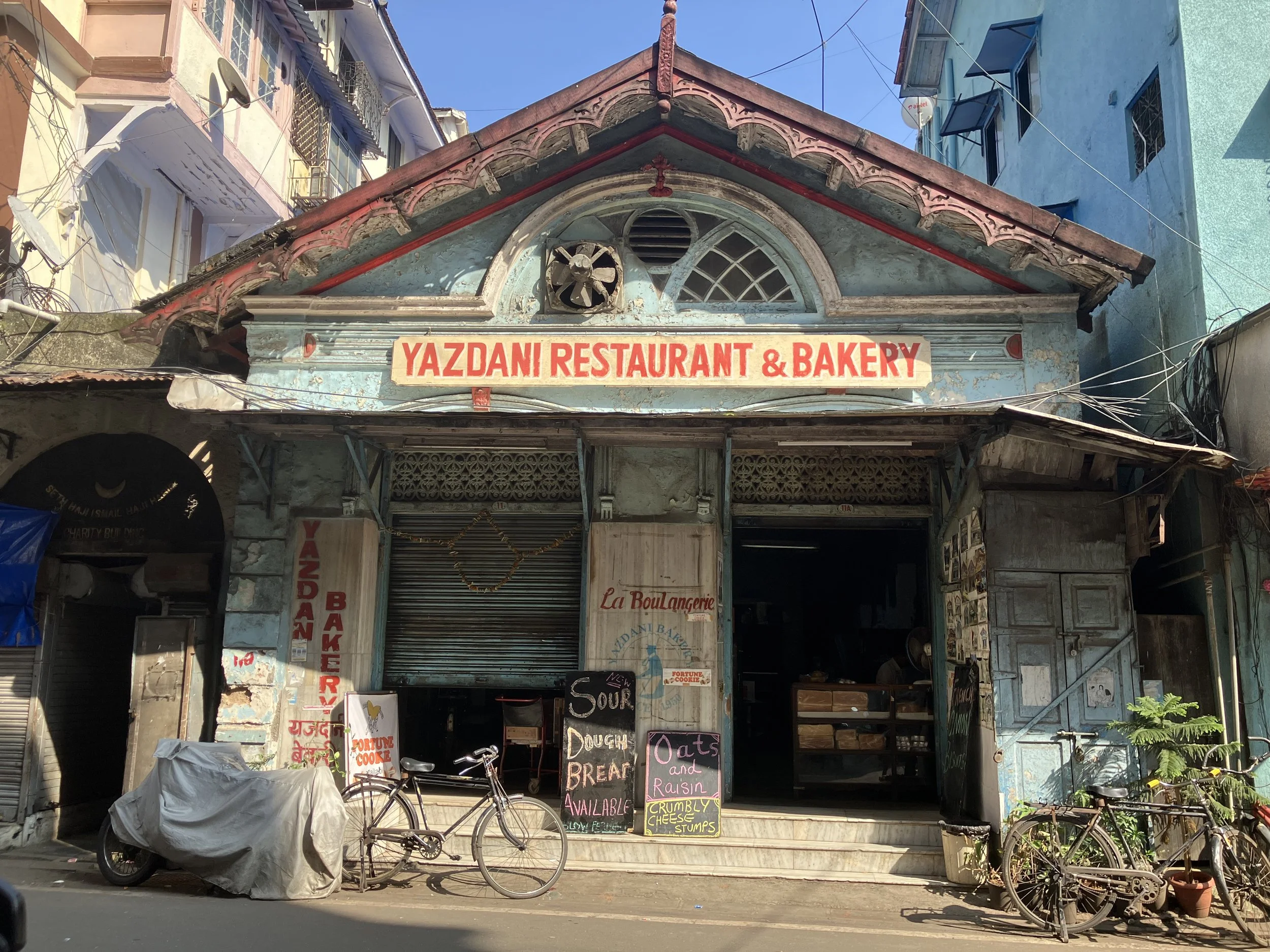
The Parsi Yazdani bakery serves delicious bun maska.
Baida Roti - the first non-vegetarian street food snack on our list (although there are vegetarian alternatives) is this thin bread wrap, classically stuffed with a minced meat (keema) filling, coated in egg and fried on the tawa. It is popular in particular among Muslim Mumbaikars, and is commonly found at street food stands on and around Muhammed Ali Road. Along with Chowpatty Beach, Mohammed Ali Road is one of the great epicentres of Mumbai street food, with the latter focussing in particular upon non-veg dishes like kebabs, nihari, and mutton biryani. Although the street food culture in this neighbourhood is most-vibrant during Ramadan, there are stalls and more established restaurants in this neighbourhood that sell street-food staples year-round. But whilst many of these dishes, delicious though they are in Mumbai, did not originate from the city, the baida roti is a Mumbai-created street food icon.
That said, its origins are a little murky, and like all of the iconic Mumbai dishes on this list, it is heavily influenced by other cuisines and cultures. The technique of wrapping a keema stuffing in dough with an egg layer is said to derive from Mughlai cuisine. Migrants from northern India likely brought this style of cooking with them to Mumbai where, and a clear pattern seems to be emerging here, it was adapted to suit local tastes and produce something uniquely Mumbaikan.
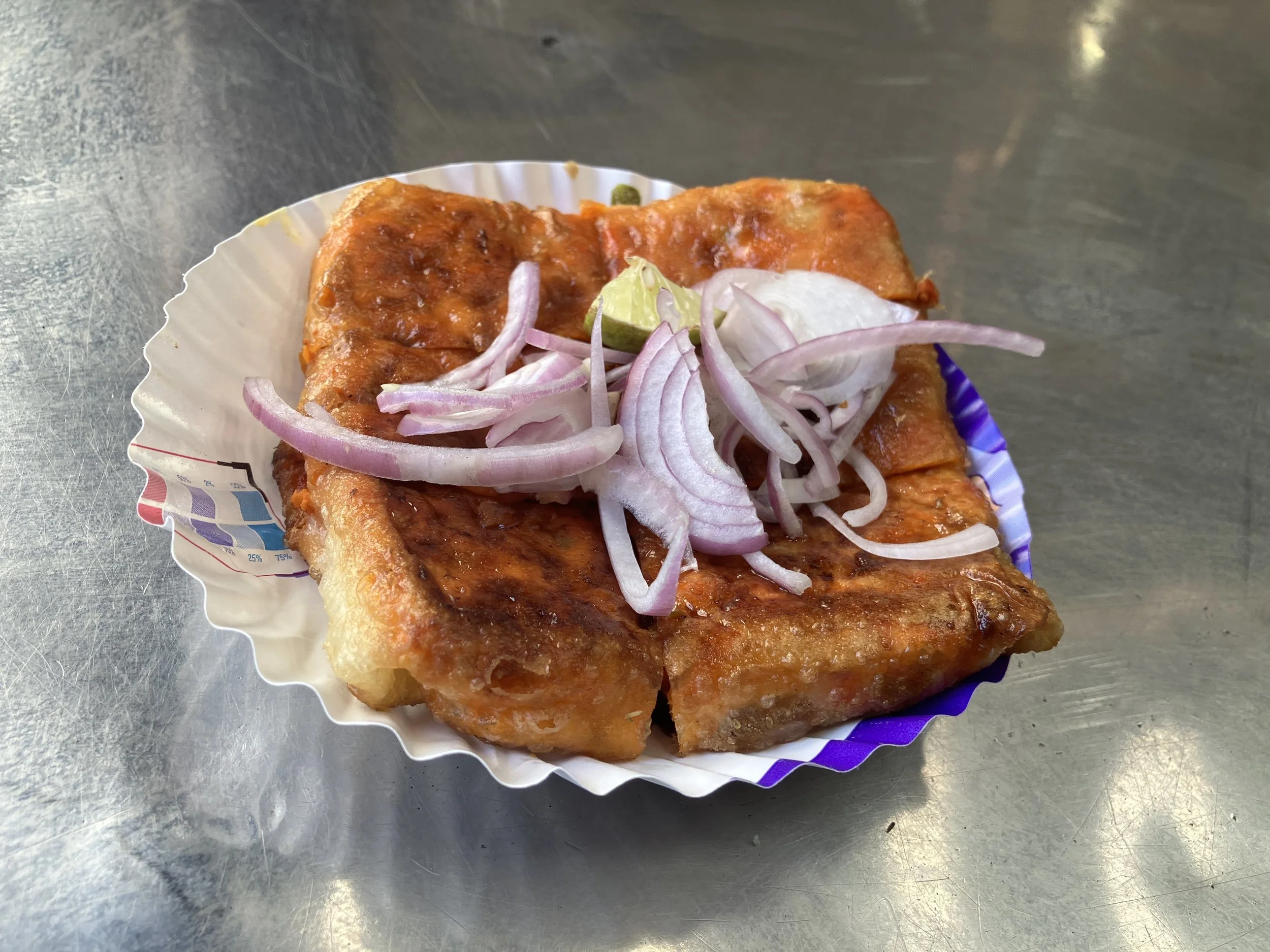
Baida roti…
Naan Chaap - the baida roti’s Mughlai-inspired cousin, also commonly found on and around Mohammed Ali Road. The “chaap”, or spiced meat filling in this sandwich is again inspired by Mughlai cuisine. And the naan? Here’s a head-spinner for you: naan bread was indeed introduced to India from Persia via the Mughal empire. But you’ll notice the “naan” in a naan chaap looks nothing like the thin blistered tandoori naan found in Mughlai cuisine, and in curry houses the world-over. Instead this naan looks much more like the pavs and the bun maskas found in Portuguese-Goan and Parsi bakeries across Mumbai. So, in other words, although this dish is undoubtedly inspired by Mughlai cuisine that brought naan to India from Persia, the “naan” in naan chaap is actually closer to the Portuguese and British inspired bread popularized in Mumbai by Parsi bakers whose ancestors fled Persia, but used Persian baking techniques to develop breads that were initially designed to suit British tastes, but were later embraced and adapted by local Mumbaikars. Confused? Welcome to the culinary legacy in India of global trade, colonialism and migration.
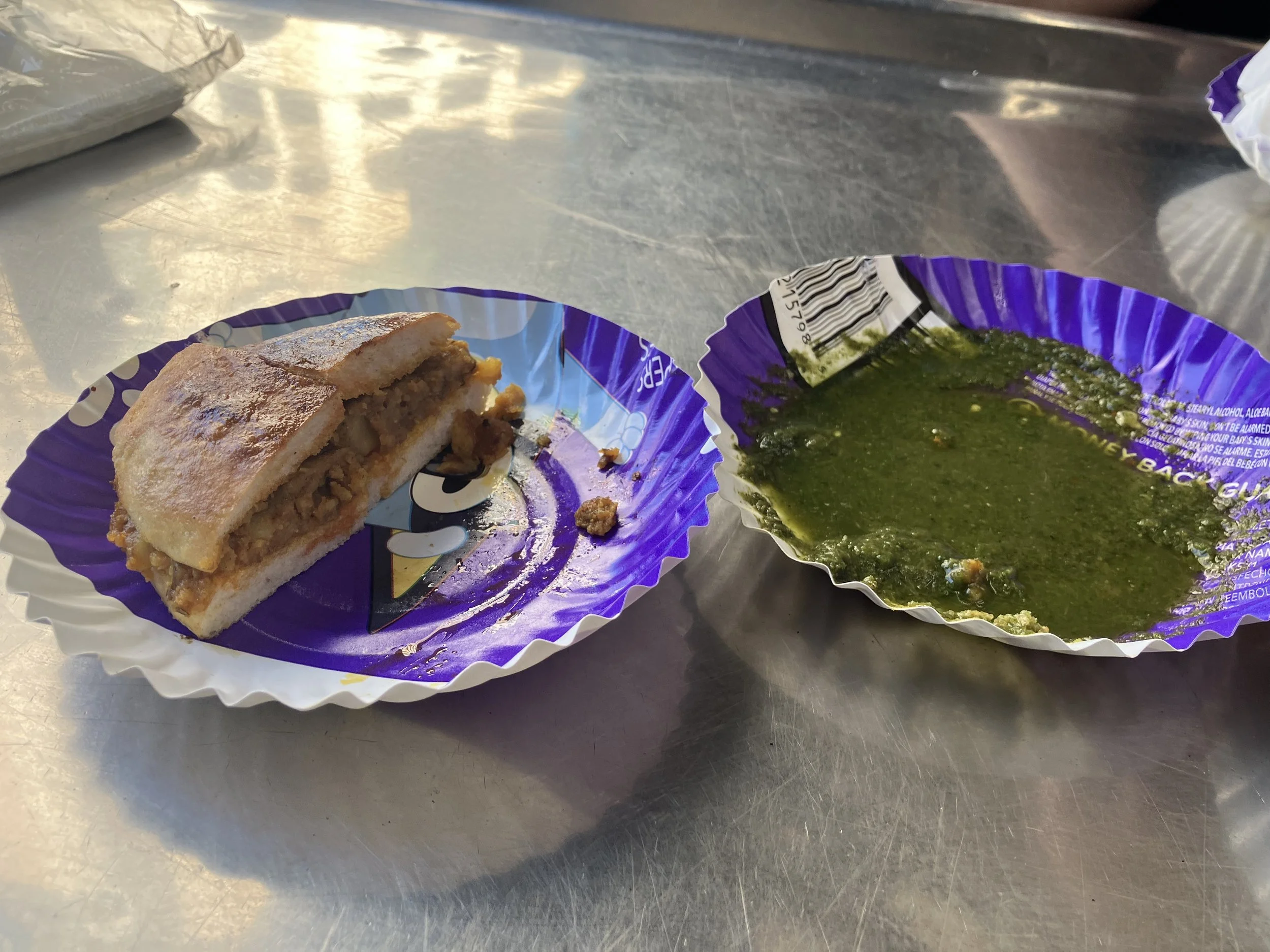
Naan chaap with green chutney…
The Frankie - another cultural amalgamation inspired, in a roundabout way, by Middle Eastern cuisine and commonly served on or around Mohammed Ali Road. The “Frankie” or “Tibb’s Frankie” as it is sometimes known was invented in 1969 by Amarjit Singh Tibb. Although born in Mumbai, Tibb travelled to Beirut where he was inspired by the popular Lebanese pita wraps. Upon returning to Mumbai he wanted to create an Indian version of this rolled meat sandwich, and so the Tibb’s Frankie was born. Instead of a pita, Tibb chose to wrap his spiced meat filling in a paratha, sometimes added an egg-coating, fried it on the tawa, and then served it with Mumbai-inspired chutneys.
According to legend, the “Frankie” was named after Jamaican cricketer Frank Worrell. Tibb’s, a cricket fan, went to watch a test-match between the West Indies and India, where a fan shouted “what a shot, Frankie!”, in admiration of a particularly impressive Worrell shot. Tibb’s liked the ring of the word, and the name for this iconic Mumbai wrap was born. Since then the frankie has inspired a whole culture of paratha street food wraps in Mumbai, with different base ingredients (mutton, chicken, paneer), spice mixes (including the use of Indo-Chinese flavourings like sichuan pepper and soy) and chutneys. All manner of paratha wraps, fried on the tawa and often cut into sushi-like slices for serving, can be found across Mumbai, but the Frankie was where it all began.
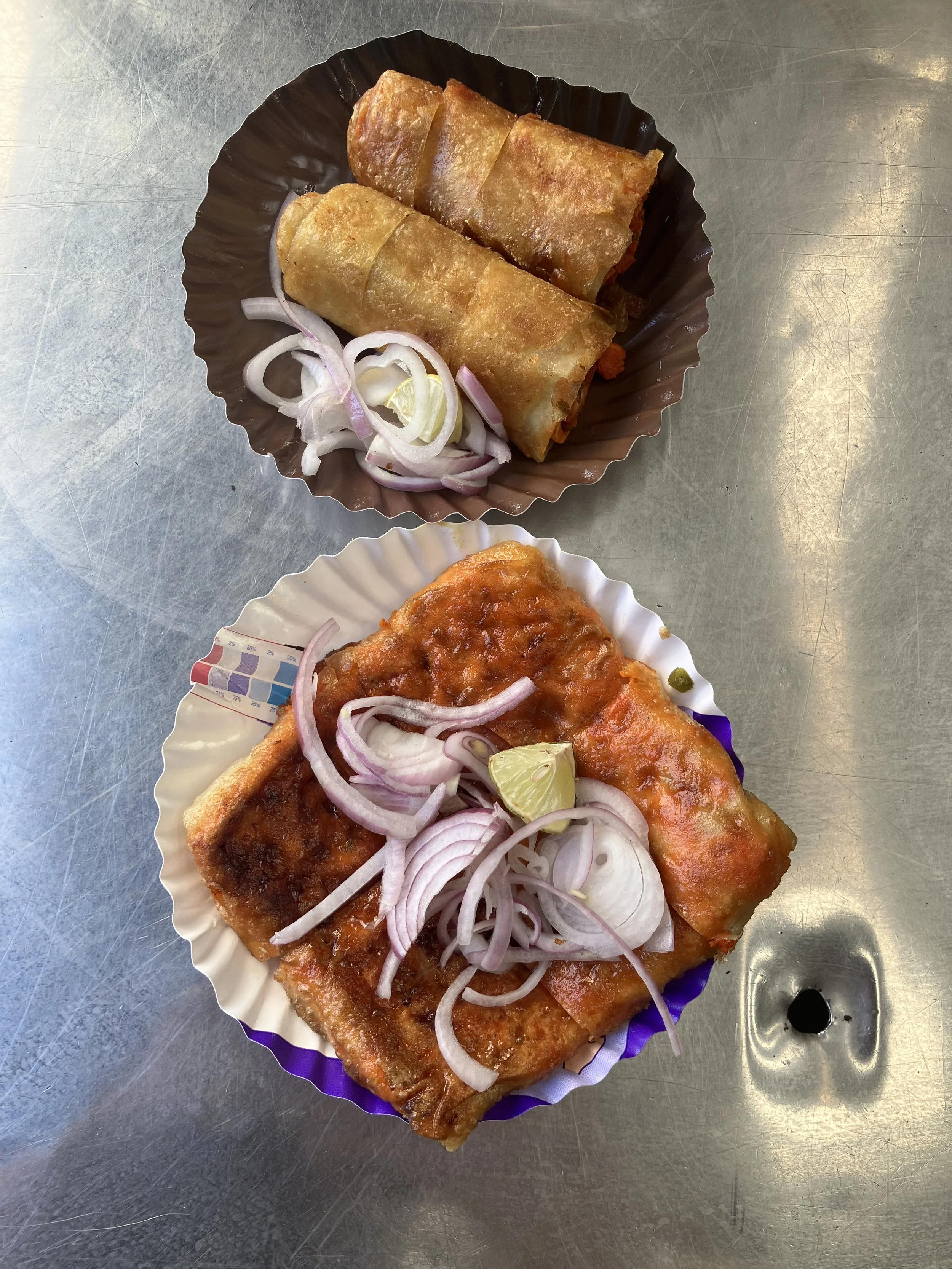
The Frankie (top) served alongside a baida roti (bottom).
And the List Goes On…
This has already turned into an absolute whopper of an article and I was only just getting started... But to avoid further testing the patience of you, dear reader, if you made it this far, I’ll stop at eight iconic Mumbai street foods. I haven’t mentioned pani puri (not from Mumbai but ubiquitous in the city and given a local twist), sev puri, keema pav, and many other legendary Mumbai street-food dishes besides. Chances are that all of their stories are as complex and multicultural as the eight above. Hopefully, next time you bite into one of these iconic Mumbai snacks, you’ll think about the incredible histories of migration, colonialism and staunch independence that came together to produce these cheap, quick and portable snacks that have sustained Mumbai’s busy workforce for generations.
